Papa Legba: Gatekeeper of the Crossroads in Vodou
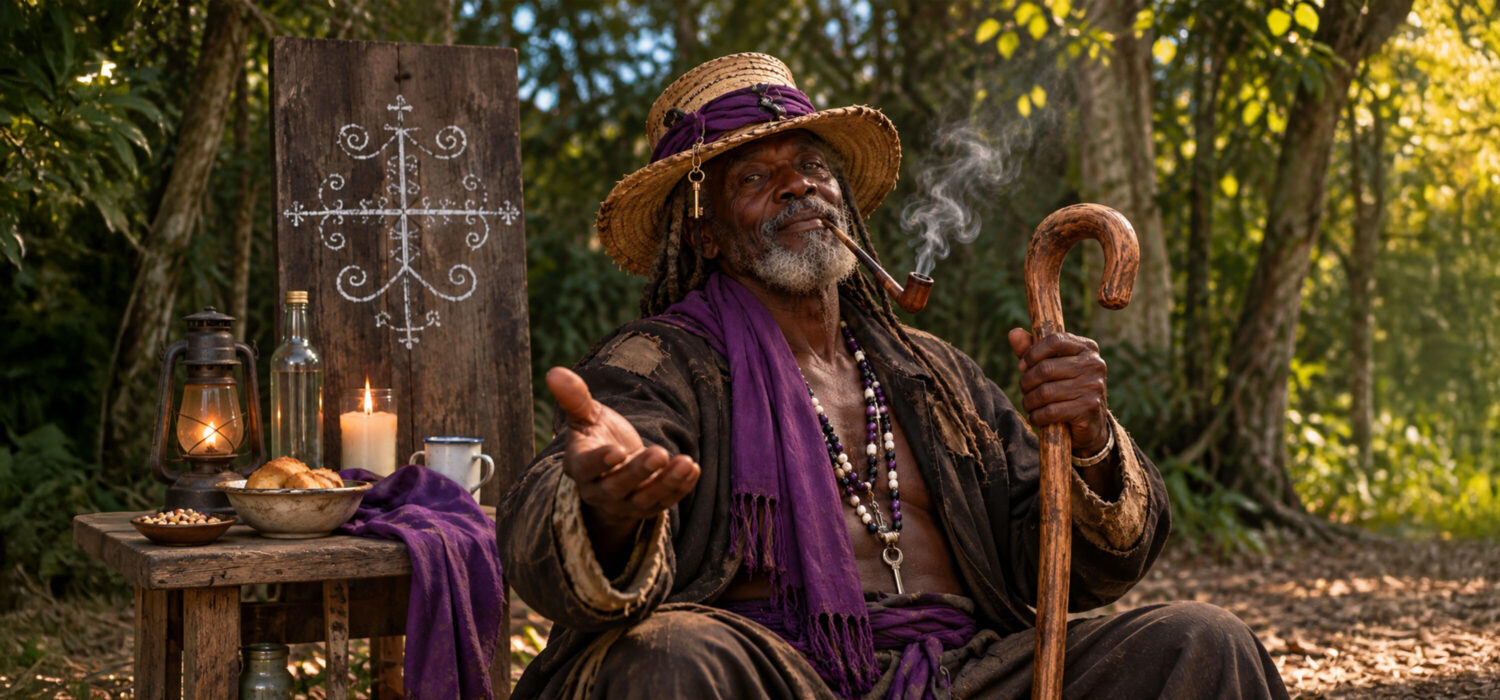
Picture an old man standing where two roads cross. He leans on a cane, a straw hat shades his eyes, and a small dog waits at his feet. He looks frail. He is not.
This is Papa Legba, the keeper of the gate between our world and the world of the spirits. In Haitian Vodou, nothing spiritual happens until he says it can. Every ceremony begins with his name, because without him, no prayer gets through and no spirit can arrive.
Many people first meet Legba on a TV screen or in a costume shop. The real Legba is older, deeper, and far more loving than any of those versions. Let's walk to the crossroads and meet him properly.
Who Is Papa Legba?
Papa Legba is a lwa (also spelled loa), a spirit in Haitian Vodou, Louisiana Voodoo, Dominican Vudú, and Winti. He is the gatekeeper and divine messenger who stands between God and humanity. He opens the door that lets people speak with the spirits, and lets the spirits answer.
Because of this, Legba is always greeted first in a Vodou ceremony. He is also the master of communication. Practitioners say he speaks every human language, so no prayer is ever lost in translation.
Legba rules every point where paths meet or begin. Crossroads, doorways, gates, and new starts all belong to him. When your road is blocked, Legba is the one who can open it.
Where Papa Legba Comes From: Dahomey, Haiti, and New Orleans
Legba's story begins in West Africa, in the old kingdom of Dahomey (today the Republic of Benin). There, the Fon and Ewe peoples honored him as the vodun of the crossroads. He was the one who carried messages between people and the divine.
Enslaved Africans carried Legba across the ocean in their memories and their prayers. In Haiti, he became one of the most important lwa in Vodou. From Haiti, his worship traveled to New Orleans, where some practitioners still call him Papa Lebas.
The Yoruba people, Dahomey's neighbors, honor a closely related spirit named Eshu, also called Elegba. We'll look at how they connect a little later.
How Papa Legba Appears: The Cane, the Hat, and the Dog
In Haiti, Legba usually appears as a poor old man. He walks with a cane or a crutch, wears a wide straw hat, and smokes a pipe. His clothes may be worn and simple.
Don't let that image fool you. His cane is said to be the very bridge between heaven and earth. The old man who seems to need help crossing the road is the one who decides who crosses at all.
Dogs are sacred to Legba, and they often walk beside him in art and stories. Like a good dog at the door, Legba guards the threshold and knows who belongs.
Papa Legba's Veve and Symbols
Every lwa has a veve, a sacred symbol traced on the ground in cornmeal or powder during ceremony. A veve works like a spiritual address. It calls the lwa to that spot and welcomes him in.
Legba's veve centers on a cross, the place where two roads meet. Many versions include his walking cane, often drawn on the right side. Some practitioners say the center of the cross is where heaven and earth touch.
To learn how veves are drawn and used, and to see the symbols of other lwa, read our guide to Vodou veves and the sacred symbols of the lwa.
Other symbols tied to Legba include:
- Keys, for the doors he opens
- The cane or crutch, his bridge between worlds
- The crossroads, his home and his throne
- Dogs, his faithful companions
- The straw hat and pipe, signs of the humble old man
Papa Legba and the Saints: Peter, Lazarus, and Anthony
Under slavery, Africans in Haiti and Louisiana often honored their spirits through the images of Catholic saints. Over time, each lwa came to share a face with a saint. This blending is called syncretism, and it is still part of Vodou today.
Legba is linked with three saints:
- Saint Peter, who holds the keys to the gates of heaven. The connection to Legba, the gatekeeper, is easy to see.
- Saint Lazarus, the old man on crutches with dogs at his side. This image looks almost exactly like Legba himself. You can read his story in our article on Saint Lazarus and his miracles of healing.
- Saint Anthony, the finder of lost things and opener of ways. Legba's feast day is often kept on June 13, Saint Anthony's day.
Here is an important point that confuses many people. In Cuban Santería, the image of Saint Lazarus (San Lázaro) belongs to a different spirit, the orisha Babalú-Ayé, the healer of sickness. Same saint, different spirit, different tradition. To learn more about him, read Babalú-Ayé: the Orisha who can cure the sick.
Is Papa Legba the Same as Elegua or Eshu?
No, though they are close relatives. Legba of Dahomey and Eshu of the Yoruba come from neighboring peoples who shared ideas for centuries. Both are messengers. Both guard the crossroads. Both must be honored first.
In Cuban Santería (Lucumí), this road-opening orisha is known as Elegua. Elegua is often pictured as a playful child, while Legba is usually an old man. Each spirit lives inside his own religion, with his own songs, offerings, and ways of being served.
Think of them as cousins, not as one spirit with three names. Practitioners in each tradition can be protective about that difference, and it deserves respect. To meet Elegua in his own tradition, read Elegua: Orisha of the crossroads, or try this Elegua prayer to open your road.
Legba and Kalfou: The Two Faces of the Crossroads
Vodou spirits are organized into families, or nations. Legba belongs to the Rada family, the cool, gentle, and protective spirits. The Rada lwa are known for their kindness and their wisdom.
The crossroads also has a darker keeper, Met Kalfou (Master Crossroads), who belongs to the fiery Petwo family. Some traditions call Kalfou Legba's twin or his other face. Where Legba opens the road during the day, Kalfou rules the crossroads at night.
Kalfou is powerful and serious, and trained priests serve him with great care, much like the spirits of the Gede family who rule the cemetery, such as Baron Samedi and his Latin American cousin, Baron del Cementerio. Most people who want help opening their road are calling on Legba, not Kalfou.
Papa Legba's Colors, Day, Numbers, and Offerings
If you ask ten practitioners about Legba's colors, you may get several answers. That is not a mistake. Vodou is passed down house by house and family by family, and each lineage keeps its own ways.
Here are the most common associations:
- Colors: red and black are common in New Orleans. White is often used in Haitian Rada service. Some houses use yellow or purple.
- Days: Monday is a common day to serve him. Some houses honor him on Wednesday or Thursday. Many say he owns every day, since every ceremony begins with him.
- Numbers: 3, and sometimes 21.
- Feast day: often June 13, shared with Saint Anthony.
Legba enjoys simple, homey offerings. Think of what you would give a beloved grandfather:
- Black coffee
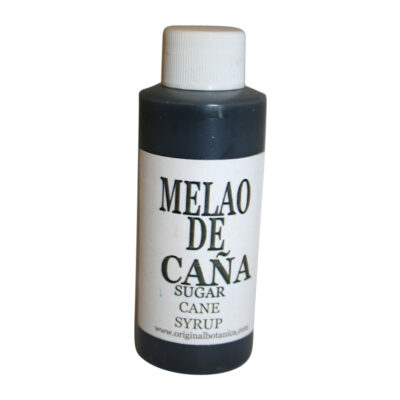
- Sugar cane syrup
- Candy
- Rum
- Tobacco, cigars, or a pipe
- Cornbread, roasted peanuts, bananas, or plantains
- A key or a small cane
If you have a godparent, priest, or elder in the tradition, follow their guidance first. Their way is the right way for your house.
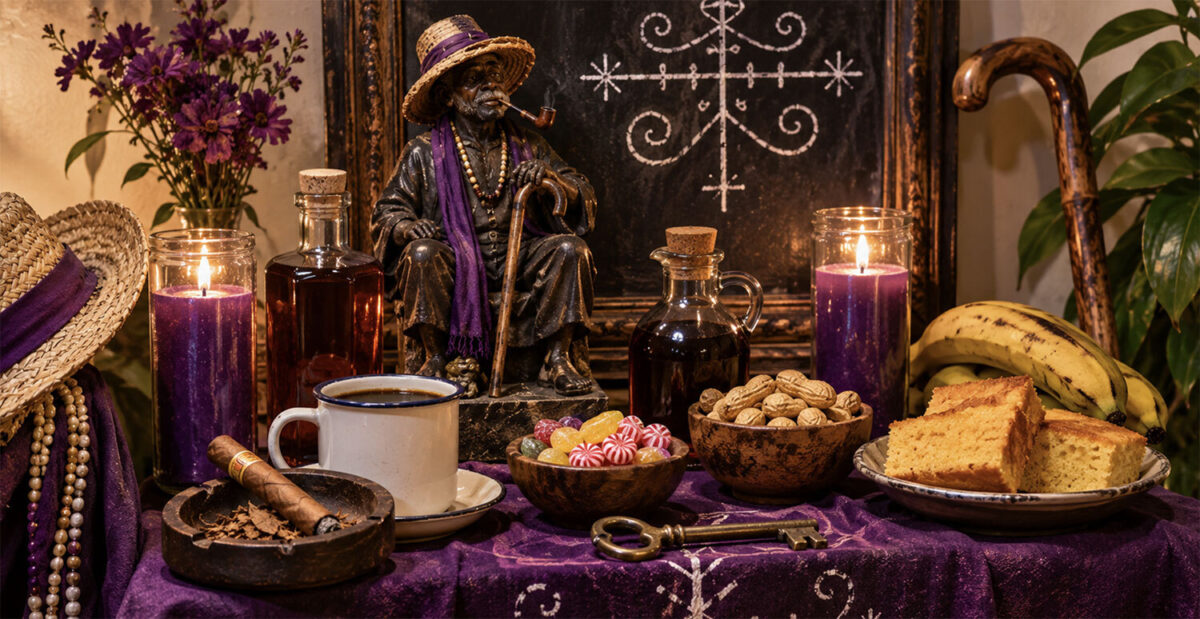
A Papa Legba altar with traditional offerings of coffee, rum, sweets, tobacco, food, and a key symbolizing his role as the opener of spiritual pathways.
Approaching Papa Legba with Respect
In Haitian Vodou, people don't pray to the lwa the way some pray to God. They serve them, with offerings, songs, and care, much like caring for respected elders. Legba is not a genie to be summoned or commanded. He is a spirit to be greeted, thanked, and honored.
Vodou is a living religion with initiated priests, called the houngan (priest) and manbo (priestess). Deeper work with the lwa, and especially with the Petwo spirits, belongs in their hands. A simple offering at home does not replace their guidance or initiation.
Still, Legba has always been known as approachable. A sincere heart, a clean space, and a humble offering are a respectful way to begin. Before any of the rituals below, cleanse yourself and your space, set your intention clearly, and keep your words honest.
In ceremony, Legba is greeted with a traditional Kreyòl song. Its most famous line asks him to open the gate:
Papa Legba, ouvri baryè a pou mwen.
(Papa Legba, open the gate for me.)
Rituals to Honor Papa Legba and Open Your Road
The three rituals below are simple, respectful ways to greet Legba at home. Each one builds on the one before. Start with the greeting, and let your relationship with him grow from there.
A Simple Offering to Greet Papa Legba
Before you ask Legba for anything, introduce yourself. This first offering is a greeting and a thank you, nothing more. It tells the old man at the gate that you come with respect and an open hand. Gather the following ingredients before beginning.
- Saint Peter (San Pedro) Prayer Candle, 7 Day
- Melao de Cana (Sugar Cane Syrup)
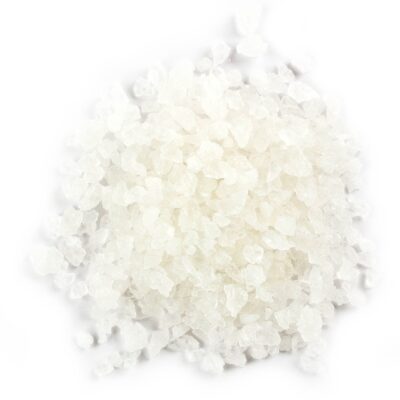
- Rock Candy
- Indian Tobacco Incense Stick 10 1/2"
- A small cup of fresh black coffee
- A glass of water
- A white plate
- Matches
Choose a quiet spot near your front door, or a small shelf facing it. Set the white plate down, then place the glass of water, the cup of coffee, and a few pieces of rock candy on it. Drizzle a little sugar cane syrup over the candy, sweet for a sweet old man.
Light the incense and let the smoke rise. Then light the Saint Peter candle and gently knock three times on the floor or table. Speak from the heart:
Papa Legba, keeper of the gate, I greet you with respect.
Thank you for watching over every road I walk.
I bring you sweetness, and I ask nothing today but your blessing.
Sit with the candle for a few minutes and notice how the room feels. When you're done, snuff the candle (never leave it burning while you're away or asleep) and relight it each day for the rest of the week. After a day or two, return the food offerings to the earth outside and wash the plate with gratitude.
Asking Papa Legba to Open Your Road
Once you've greeted Legba, you can ask for his help. This ritual is for times when life feels stuck, like a job search that goes nowhere or doors that keep closing in your face. Legba is the one who turns the key. You will need the following components to perform this ritual.
- Open Road (Abre Camino) 7 Day 1 Color Prayer Candle
- Open Road (Abre Camino) Oil
- Saint Peter's Key Charm
- A small square of brown paper
- A pencil
- A small cup of black coffee or a splash of rum
On the brown paper, write your full name. Below it, write the road you want opened, in simple words like "a new job" or "a fresh start." Draw a small cross over the words, the crossroads where Legba stands.
Rub a few drops of Open Road Oil between your palms. Anoint the key charm, then dress the top of the candle with a thin ring of oil. Fold the paper toward you three times and set it under the candle, with the key resting on top of the glass. Place the coffee or rum beside it.
Light the candle and say:
Papa Legba, open the gate for me.
Where my road is closed, let it open.
Where I am lost, show me the way.
I thank you for every door you open in my life.
Let the candle burn while you are home and awake, then snuff it and relight it each day until it finishes. When it's done, carry the key charm with you as a reminder that your road is open. Thank Legba out loud, and when your request comes through, bring him a sweet offering of thanks.
A Doorway Blessing for New Opportunities
Legba lives at every threshold, and your front door is the first crossroads of your home. A clean, blessed doorway invites good things in. This ritual is lovely to do at the start of a new month, a new job, or any new season of life.
As you prepare, collect these sacred items.
- Open Road (Abre Camino) Bath & Floor Wash
- A bucket of warm water
- A clean cloth or mop
- A small handful of candy
- A spare house key
Add a capful of the floor wash to the bucket of warm water. Starting at the back of your home, wash toward the front door, pushing old, stuck energy out ahead of you. Finish by wiping the threshold itself, inside and out.
Open the door and stand in the doorway. Hold the spare key in your hand and say:
Papa Legba, guardian of this door, let only blessings cross here.
Open my home to new opportunities, good people, and good news.
Set a few pieces of candy just outside the door as a thank you, and tuck the spare key somewhere safe near the entrance. Pour the leftover wash water outside, away from the house, or at a crossroads if you can. Wash your hands, and walk back inside knowing your doorway is open to good things.
For more ways to clear a blocked path, watch our video on three simple road-opening rituals.
The Real Papa Legba vs. the One on TV
Many people first hear Legba's name from television. In American Horror Story: Coven, he appears as a frightening figure who trades in souls. Other films and shows borrow his look, his hat, or his name for villains and tricksters.
Those stories are entertainment, not religion. In Vodou, Legba does not steal souls or make evil bargains. He is a kind, wise grandfather spirit who opens the way so people can reach the divine.
You may also hear the old blues legend of a musician selling his soul to a dark man at the crossroads. That tale comes from Southern folklore, and some writers have tied it to Legba. Practitioners see it differently: the crossroads is sacred in many traditions, but Legba himself is not the devil.
If you're curious about how African diaspora spirituality gets misread as evil, our article Is Hoodoo evil, demonic, or a sin? explores the same misunderstanding.
Walking with Papa Legba Every Day
Legba teaches that every beginning matters. Each time you open a door, start a new task, or step onto a new path, you're standing at a crossroads. He reminds us that how we begin shapes where we arrive.
You can keep his energy close in small, daily ways:
- Pause at your front door in the morning and ask for an open road.
- Say a quick thank you when an unexpected door opens for you.
- Keep your entryway clean, bright, and free of clutter.
- Leave a piece of candy or a splash of coffee for him now and then.
- Speak kindly, since Legba is the lord of words and communication.
Most of all, Legba asks for humility. The old man with the cane teaches that true power often walks quietly. Respect the elders, honor the beginnings, and the road has a way of opening.
Frequently Asked Questions About Papa Legba
Is Papa Legba real?
Papa Legba is a real spirit honored in Haitian Vodou, Louisiana Voodoo, and related traditions. He is served by practitioners in Haiti, New Orleans, and across the diaspora. The versions on TV are fictional, but the spirit they borrow from is part of a living religion.
Is Papa Legba good or evil?
In Vodou, Papa Legba is a kind and protective spirit. He opens the gate between people and the spirit world, and he is greeted with love and respect. His evil image comes from movies and TV, not from the tradition itself.
Is Papa Legba the same as Elegua?
No. They are closely related spirits from neighboring West African peoples, and both guard the crossroads. Legba comes from the Fon of Dahomey and lives in Vodou, while Elegua comes from the Yoruba and lives in Santería. Each is served in his own way.
Who is Papa Legba's wife?
In many Haitian Vodou houses, Legba's wife is Ayizan, the lwa of the marketplace and the first priestess of Vodou. Some lineages tell the story differently. As with many details in Vodou, it depends on the house.
What offerings does Papa Legba like?
Legba loves simple, sweet, and humble gifts. Common offerings include black coffee, sugar cane syrup, candy, rum, tobacco, cornbread, roasted peanuts, and plantains. A key or a small cane is also a fitting gift for the keeper of the gate.
What are Papa Legba's colors?
It varies by tradition. Red and black are common in New Orleans, white is often used in Haitian Rada service, and some houses use yellow or purple. Follow the guidance of your elders or your own house.
What saint is Papa Legba?
Legba is linked with Saint Peter, who holds the keys to heaven, Saint Lazarus, the old man on crutches, and Saint Anthony. His feast day is often celebrated on June 13, Saint Anthony's day.
What does Papa Legba's veve mean?
Legba's veve is built around a cross, the meeting place of two roads and the point where heaven touches earth. Many versions include his walking cane. Drawing it calls Legba to the spot and invites him to open the way.
Every road begins with a single step, and every step begins at a gate. Papa Legba stands there still, patient and wise, leaning on his cane and waiting to be greeted. Come to him with a humble heart and a sweet offering, and you may find that the doors you thought were closed were only waiting for someone to knock.