The Types of Spirit Guides: Ancestors, Angels, and Protective Guides Explained
There is a moment many people recognize without ever having a name for it. A grandmother who passed years ago seems to sit beside you on a hard morning. A stranger's kindness arrives at the exact second you needed it most. A dream repeats itself until you finally listen. These are not coincidences. They are the fingerprints of your spirit guides, and learning to name them is often the first step toward understanding your own spiritual path.
The term "spirit guide" gets used loosely online, often as a catch-all for anything from angels to totem animals to New Age archetypes borrowed from traditions their writers never lived inside. But across Espiritismo, Santería, Hoodoo, and folk Catholic practice, the guides who walk with us have real names, real histories, and real ways of making themselves known. Some are family. Some are protectors assigned before you were born. Some have never worn a human body at all.
Understanding which kind of guide is reaching out to you changes how you listen. A grandmother's spirit asks for a different kind of altar than a guardian angel does. A protective guide from the cuadro espiritual speaks through different signs than an animal guide does. This guide walks through each type in turn, so that when something unseen brushes against your life, you will know who it might be.
Ancestral Spirits and the Guides Who Share Your Blood
Ancestral guides are the spirits most people meet first, often without realizing it. An ancestral spirit can be a grandmother who died when you were young, a great-uncle you never met, or a distant relative whose name has been lost but whose presence has not. In many Latin and Caribbean households, these spirits are simply called los muertos, the dead, and honoring them is not a special occasion. It is a habit of the home.
In the Espiritismo tradition, ancestral spirits are understood to be part of a person's cuadro espiritual, the spiritual court of guides assigned to protect and instruct them throughout life. Ancestors in this court often work through misas espirituales, spiritual masses where mediums receive their messages, though most people build a much simpler daily relationship at home. A white table, a glass of water, and a lit candle are often all it takes to open the door.
Día de los Muertos, celebrated on November 1st and 2nd, gives this relationship its most visible yearly expression. Families build ofrendas with marigolds, photographs, favorite foods, and the small objects a loved one cherished in life. The belief is not that the dead need these things. It is that offering them is how the living keep the connection open. For a deeper look at how this holiday compares with All Saints' Day, see our guide to Day of the Dead and All Saints' Day.
Ancestral spirits tend to communicate through practical, almost domestic signs. You may smell a grandmother's perfume with no source in the room. You may find yourself reaching for a recipe or a phrase that belonged only to someone who has passed. Dreams are a common channel as well, particularly dreams that feel more vivid or lucid than an ordinary night's sleep.
To begin building a relationship with your ancestral guides, a dedicated space helps more than any single ritual does. Have these ingredients ready as you create your spiritual sanctuary:
- A small table or shelf set aside only for this purpose
- Photographs of departed loved ones, where available
- A white glass filled with fresh water, replaced regularly
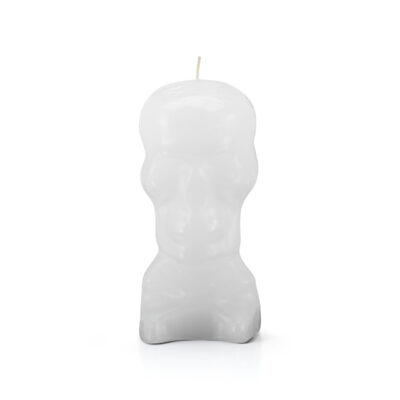
- A Skull Candle in white, or a plain white pillar candle
- Fresh flowers or marigolds when in season
- A small offering of food or coffee your ancestor once enjoyed
Set the table with care rather than urgency. Light the candle and speak simply, in your own words or with a short prayer such as, "I honor you, I remember you, and I ask that you walk with me still." Sit for a few quiet minutes before you leave the space. If you wish to formalize the practice, our guide to building an ancestor altar walks through the fuller version, and an Egun shrine offers the Yoruba-rooted approach to the same devotion.
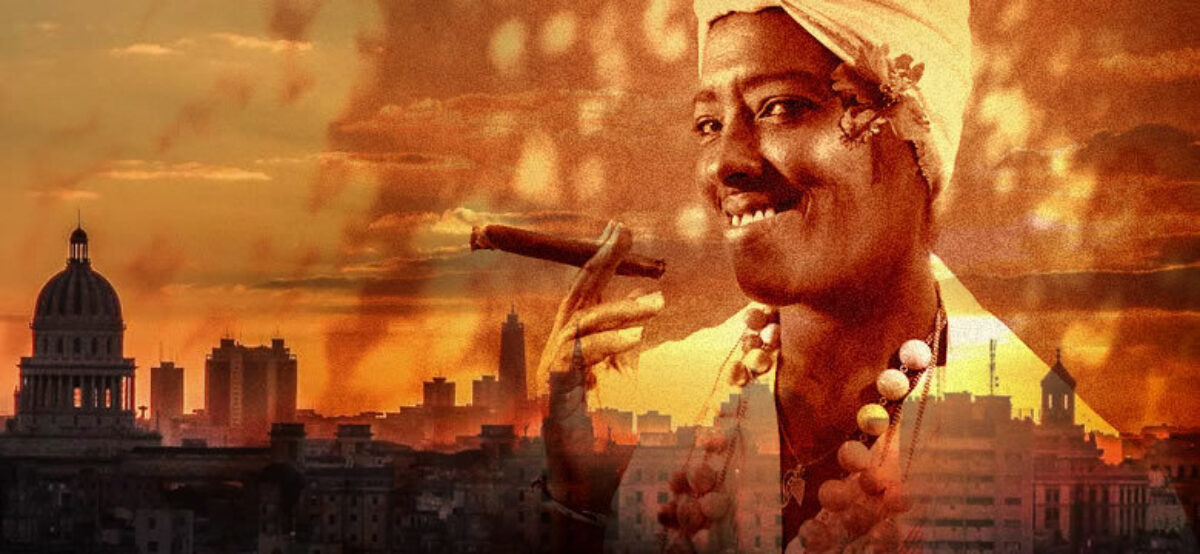
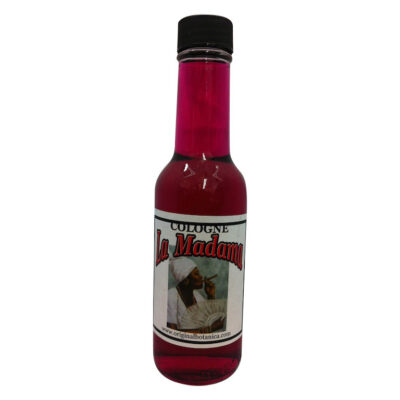
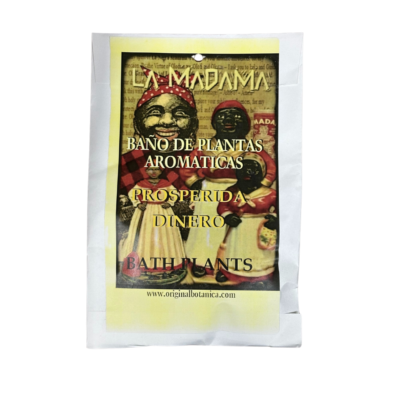
La Madama, one of the most protective guides of Espiritismo, is usually called upon for her wisdom and protection.
Guías Espirituales: The Protective Guides of Espiritismo
Beyond the family dead, Espiritismo recognizes a second, distinct category of spirit: the protective guides who are not blood relatives at all. These guides are said to volunteer for the work of watching over a person, often across many lifetimes, and each type carries its own personality, gifts, and way of showing itself.
La Madama is among the most recognized of these guides, appearing as a wise Black woman rooted in the healing traditions carried by enslaved Africans throughout the Caribbean and the American South. She is called on for herbal wisdom, protection of the home, and no-nonsense practical guidance. Readers wanting her fuller story should see our article on the mystery of La Madama.
El Indio, the Indigenous guide, brings a connection to the land, to healing plants, and to quiet strength. La Gitana, the Gypsy guide, is associated with fortune, intuition, and reading the signs life leaves behind. El Congo carries deep ancestral African wisdom and physical protection, while El Árabe represents mystery, trade, and far-reaching knowledge. None of these guides are meant to be costumes or aesthetics. They are understood as real spiritual personalities with their own histories, and practitioners honor that history rather than borrow it casually.
These guides often make themselves known through a specific feeling rather than a specific sight. Some people describe a sudden shift in posture or voice, as though the guide is briefly close. Others notice a pull toward a particular color, scent, or style of dress that does not match their own habits. A protective guide may also appear in dreams dressed distinctly, in the clothing associated with their type.
Building a relationship with a guía espiritual is traditionally done gradually, and ideally under the guidance of an experienced spiritualist or medium, since these are complex spiritual relationships and not simple candle work. As you prepare, collect these sacred items to begin:
- A La Madama Herb Bath or La Madama Cologne, if you feel drawn to her energy
- Rompe Saraguey Herb for cleansing and clearing spiritual static
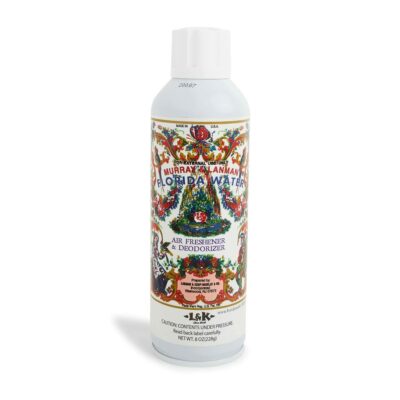
- A Florida Water (Agua de Florida) Spray for the space
- A white candle or seven-color candle, lit with quiet intention
If you feel a strong pull toward one of these guides, the most honoring next step is often not a solo ritual but a conversation with a spiritualist who can help you understand what you are sensing. Our own site spiritualist, Angelina, notes that protective guides tend to arrive gently at first. "They test the ground before they walk on it fully," she explains. "If something feels like a guide but feels rushed or demanding, slow down and ask again."
Angels and the Guides Who Never Lived
Angels occupy a different category entirely, since they are understood, across nearly every faith tradition, as beings who never held human form. Every person is believed to have at least one guardian angel from the moment of birth, a companion who does not judge and does not leave. Archangels are a further tier above guardian angels, each one carrying a specific area of protection or guidance.
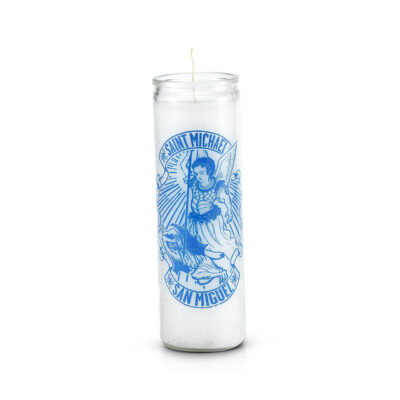
Among the archangels, Saint Michael holds a place of particular importance in folk Catholic and Santería-influenced households alike, called upon for protection, courage, and the clearing away of negative forces. If you feel his presence strongly, our full guide on who Saint Michael the Archangel is and our collection of prayers to petition him both go much deeper than this overview can.
Angels tend to communicate through synchronicity more than through direct signs. Repeated number sequences, often called angel numbers, are one of the most common examples. If a specific number keeps crossing your path in ways that feel too frequent to ignore, our simple guide to angel numbers can help you begin interpreting it, and our piece on the meaning of angel number 444 covers one of the most commonly reported sequences specifically.
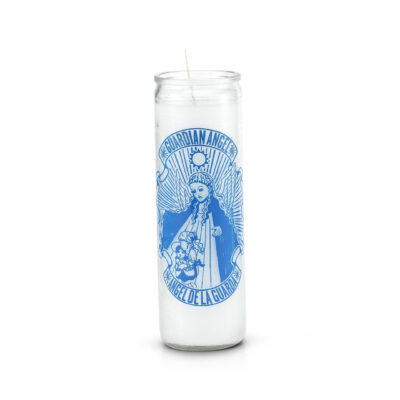
To open a clearer line to your guardian angel, a simple, quiet practice works best. Before starting, set aside a Guardian Angel candle and a small amount of angel-blessed oil if you have it on hand. Anoint the candle, light it, and speak a short, sincere request rather than a long prayer. "Guardian angel, make your presence known to me, and guide my steps today," is enough. Our article on connecting with your guardian angel offers additional detail if this relationship is new to you.
Connecting with an animal guide asks for patience more than ritual.
Animal Guides and the Messengers of the Natural World
Animal guides are among the most commonly reported spirit guides, and also among the most misunderstood. It helps to be precise about the distinction. A familiar is a living animal that works alongside a witch or practitioner. A spirit animal, in the strict sense of the term, belongs specifically to Native American spiritual traditions and should not be claimed casually outside of them. An animal guide, by contrast, is simply the spirit of any animal, living or passed, that appears to teach, comfort, or protect.
A beloved pet who has died is one of the most frequent forms an animal guide takes. Their presence after death often feels like a continuation of the bond you already had, a familiar weight at the foot of the bed or a flicker of movement in the corner of your eye. Wild animal guides work differently. They tend to arrive as recurring encounters rather than one-time sightings: the same bird returning to your window, the same creature crossing your path on multiple occasions.
In many Latin American households, animal guides carry a specific seasonal weight around Día de los Muertos and other ancestral observances, when butterflies, hummingbirds, and other small creatures are believed to carry messages from the departed. This is one reason animal guides and ancestral spirits are so often discussed together rather than as fully separate categories.
Connecting with an animal guide asks for patience more than ritual. As you prepare to notice one, have these tools ready:
- A journal kept specifically for recording animal encounters and dreams
- Sandalwood Incense Cones or sticks, to support quiet reflection
- A Guardian Angel Incense Stick or white candle, if you wish to combine the practice with a short prayer
Sit outside when you can, in a park, a garden, or simply your own doorway, and pay attention without forcing an answer. Note any animal that appears more than once, in dreams or waking life, and consider what qualities it embodies. A hawk teaches vision and patience. A dog teaches loyalty. Let the animal's own nature suggest its message rather than searching for a meaning that fits what you want to hear.
Ascended Masters and Teachers of the Spirit World
Ascended masters are spirits believed to have once lived as ordinary people before reaching a level of enlightenment that lifted them beyond the human cycle entirely. Figures recognized across traditions as ascended masters include Jesus, Buddha, and a number of saints and holy teachers specific to individual faiths. Unlike ancestral spirits or protective guides, ascended masters are not thought to work for one person alone. They are understood to teach and support anyone who calls on them, across countless lives at once.
Because ascended masters are less personal by nature, connecting with one tends to happen through devotion and discipline rather than through altar work or direct signs. A regular meditation practice, a consistent prayer, or simply returning again and again to a single figure's teachings tends to open the door more reliably than any single ritual. Many practitioners find that lighting a plain white candle and sitting in quiet reflection, without asking for anything specific, is enough to feel a master's guidance settle in.
If a particular saint or master keeps returning to your thoughts, it is worth exploring their specific story rather than treating the pull as generic. Saint Michael, discussed above under Angels, functions for many practitioners as both archangel and ascended teacher of courage. For readers drawn toward folk saints outside the Catholic canon, figures like Maximón carry their own rich, specific traditions worth approaching on their own terms.
Living Alongside Your Guides
None of this knowledge is meant to turn spirituality into a checklist. The point of learning the different types of spirit guides is not to sort every strange feeling into a category, but to build the kind of attention that lets you notice when something unseen is reaching toward you. Most people carry only a few active guides at any given time. You may feel close to your ancestors and distant from angels, or the reverse, and both are ordinary.
The simplest daily practice is also the most effective one: a moment of acknowledgment each morning. A short "good morning" to your ancestors as you make coffee, a quiet thank-you to your guardian angel before you leave the house, a pause to notice which animal crossed your path today. Guidance rarely arrives as thunder. It arrives as a habit of paying attention, built one ordinary day at a time.
Frequently Asked Questions
What are the different types of spirit guides?
The main types recognized across Espiritismo, Santería, and folk Catholic practice are ancestral spirits, protective guías espirituales such as La Madama and El Indio, angels, animal guides, and ascended masters. Each type communicates differently and serves a different role in a person's spiritual life.
How do I know who my spirit guide is?
Pay attention to repeated signs rather than a single dramatic experience. A recurring dream figure, a specific scent with no clear source, or an animal that appears again and again are all common ways guides introduce themselves. Journaling these moments over several weeks often reveals a pattern more clearly than trying to identify a guide all at once.
What are signs from spirit guides?
Common signs include repeated numbers, a familiar scent when no source is present, vivid or recurring dreams, sudden strong feelings of comfort or protection, and animals or objects that keep crossing your path in ways that feel meaningful rather than random.
Can a family member become a spirit guide after they pass?
Yes. In Espiritismo and many Latin spiritual traditions, deceased family members are among the most common and trusted spirit guides. They are typically the easiest guides to recognize, since their presence often feels familiar rather than mysterious.
Do I need to be initiated to work with a protective spirit guide?
No, though deeper work with a guía espiritual benefits greatly from the guidance of an experienced spiritualist or medium. Simple, respectful acknowledgment at home is appropriate for anyone. More involved relationships, particularly with guides from the Espiritismo cuadro espiritual, are best approached gradually and with proper guidance.
How many spirit guides does a person have?
Most practitioners believe everyone has more than one guide, often including at least one guardian angel from birth and one or more ancestral guides who join throughout life. The exact number is not fixed, and guides may come and go depending on what a person needs at a given time.
Whoever walks beside you, whether an ancestor who shares your blood, a protector who chose you before you were born, or a guardian who has never worn a human face, the relationship deepens the same way any relationship does. You show up, you pay attention, and slowly, you learn each other's language.