Is Hoodoo Evil, Demonic, or a Sin? What Rootwork Tradition Actually Teaches
No, Hoodoo is not evil, demonic, or a sin. Hoodoo is a folk practice, not a religion. Many practitioners carry it alongside deep Christian faith, not in place of it. Not every Christian community agrees, and that is fine, because Hoodoo was never meant to demand agreement. It was meant to be useful.
If you found this page turning a candle over in your hands at midnight, wondering if your grandmother's ways put your soul in danger, you are not alone. This question comes up constantly, more often whispered than spoken aloud. It deserves a real answer, not a scolding one.
What Is Hoodoo, Really?
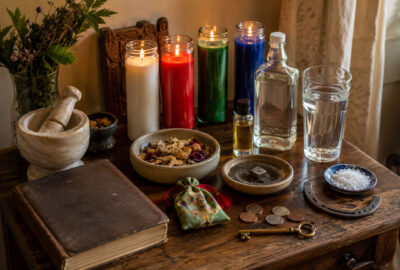
Hoodoo is a body of folk magic and spiritual practice. It developed among enslaved and free Black Americans in the South. It draws on West and Central African spiritual knowledge, Native American plant lore, and the Protestant Christianity that surrounded it. It is not Voodoo, and it has no priesthood or creation story of its own. Think of it as a toolkit: root and herb work, candle work, spiritual baths, and prayer, used to address real problems like protection, healing, love, and justice.
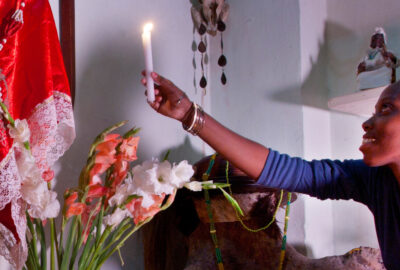
This distinction resolves most of the worry behind this question. A religion asks you to believe something and organize your worship around it. A folk practice asks you to do something, using materials and prayers passed down as effective. That is why so many Hoodoo practitioners sit in church on Sunday and dress a candle on Monday, feeling no contradiction at all. The Bible itself sits on many rootworkers' altars, used as a source of scripture and psalms for spellwork.
It would be dishonest to claim every Christian tradition sees it this way. Some denominations and individual believers view folk magic as spiritually risky, and that view deserves respect, not dismissal. Hoodoo has never asked for universal approval. It asks to be understood on its own terms, as a practical inheritance, not a rival faith.
Why Hollywood Keeps Getting This Wrong
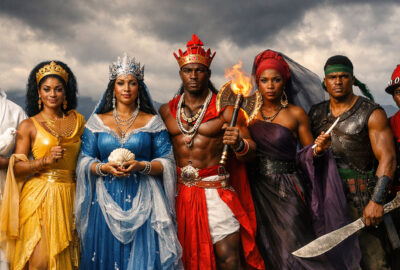
Part of why this question feels so loaded comes from film and television. For decades, shows have treated "Voodoo," and anything that sounds like it, as shorthand for sinister control and blood magic. Apple TV+'s 2026 series Cape Fear is a recent example. Its villain descends into obsession and revenge, and the show ties that descent to his devotion to the Orisha Changó, framing a real, living tradition as evidence of his unraveling. Horror films have leaned on "Voodoo dolls" and sinister rituals as an easy plot device for generations, almost never with a real practitioner or scholar in the room.
That pattern has real consequences. It teaches people to link ancestral practices with danger before they ever meet a real practitioner or open a real book. Santería alone is estimated to have hundreds of thousands of practitioners in the United States, possibly over a million, according to EBSCO Research Starters. That is a lot of real, everyday devotion for a tradition so often reduced to a villain's backstory. If your unease about Hoodoo comes from a movie scene rather than your own church or family, it is worth naming that plainly. Fiction is not scripture.
The portrayal is not always this one-sided, though. Ryan Coogler's 2025 film Sinners treats Hoodoo with real care. It draws on Black spiritual historians to show conjure work in 1930s Mississippi as a source of protection and strength, not menace. It proves Hollywood can get this right when it actually consults the culture instead of borrowing its aesthetics.
For Anyone Reconnecting With Their Roots
If you are a young Black American exploring Hoodoo for the first time, you do not need anyone's permission to be curious. Maybe a grandmother or great-aunt practiced it quietly. Maybe you are simply researching your own family's history. Either way, this is your inheritance too, spoken about openly in your household or not.
Christian affiliation among Black Americans has shifted over the past two decades, from roughly 85 percent in 2007 to about 73 percent today, according to Pew Research Center's 2025 Religious Landscape Study. That shift reflects a broader rethinking of faith and identity happening across generations. Reconnecting with Hoodoo is one thread within that shift, often an addition to Christian upbringing rather than a rejection of it. Many who explore Hoodoo remain Christian, some explore other traditions like Santería or Ifá, and some simply want to understand where their family's old remedies came from.
You are allowed to move slowly. Keep what serves you, and set aside what does not. Hoodoo was built by people who had to adapt constantly to survive, and it has never demanded one rigid entry point.
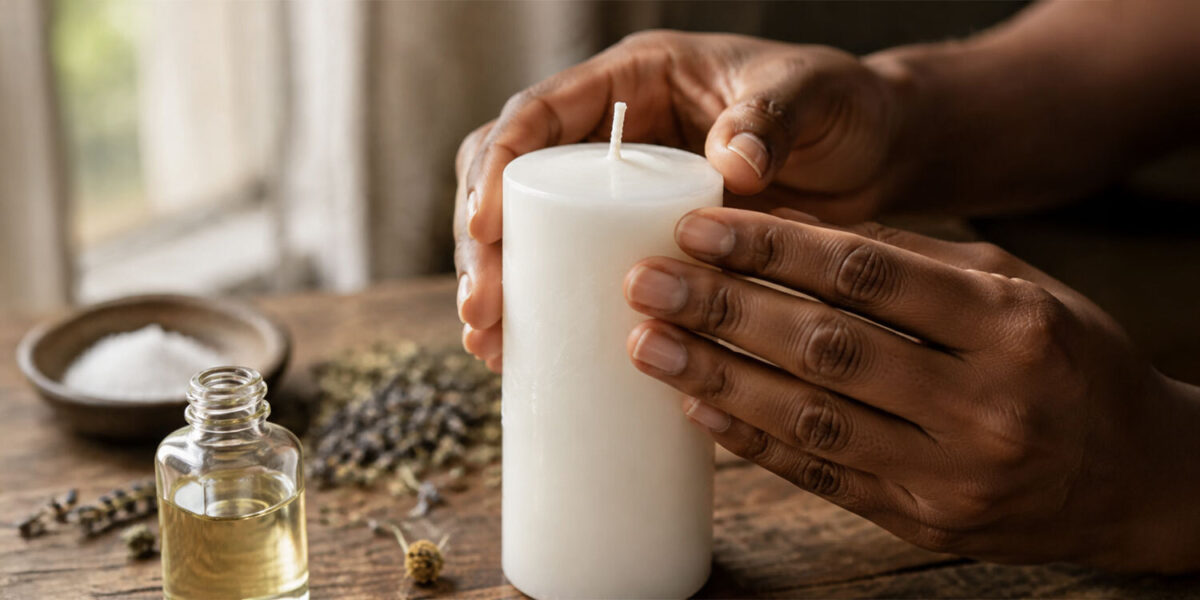
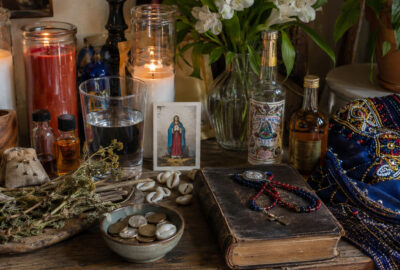
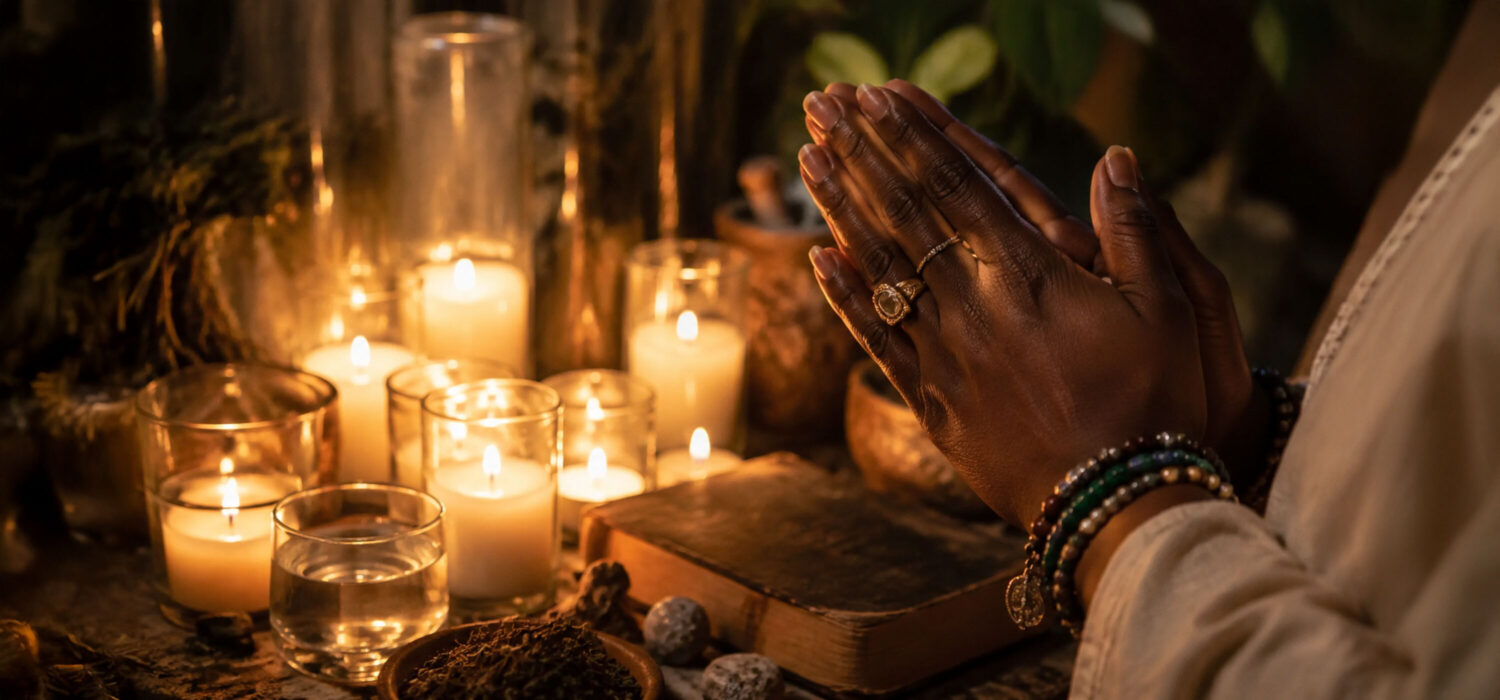
Hoodoo uses oils, herbs, and prayer together, one tradition sitting comfortably beside another.
Hoodoo vs. Voodoo: Clearing Up the Confusion
These two words get mixed up constantly, and the confusion makes sense given how similar they sound. Voodoo (more accurately spelled Vodou in Haiti, or Vodun in West Africa) is an organized religion. It has its own priesthood, its own spirits called lwa, and structured ceremony. Hoodoo is not a religion at all. It is a folk magic tradition from the Black American South, with no deities, priests, or formal doctrine of its own.
Here is a simple way to hold the difference. Vodou works more like Santería or Catholicism, a full religious system. Hoodoo works more like a grandmother's home remedies and prayer practices, a set of techniques you would recognize if you grew up around them, even without formal training.
Hoodoo: Frequently Asked Questions
Is Hoodoo evil?
No. Hoodoo is a set of practical tools, herbs, candles, prayer, and intention, used most often for protection, healing, and drawing good fortune. Like any tool, it can be turned toward harm by someone determined to cause harm. But the practice itself carries no built-in moral charge.
Is Hoodoo demonic?
No. Hoodoo does not involve calling on demons, and it sets up no opposition to God. Its roots come from West and Central African spiritual knowledge blended with the Protestant Christianity of the American South. Most traditional Hoodoo prayers call directly on God, Jesus, and the Psalms.
Is Hoodoo a religion?
No. Hoodoo has no shared theology, priesthood, or creation story of its own. It is a folk magic and healing practice, historically carried alongside whatever religion a practitioner already held, most often Christianity.
Is Hoodoo against Christianity or the Bible?
Views differ across denominations and individual believers, and that disagreement is real. It deserves respect. Many rootworkers see no conflict at all, and use the Bible itself, especially the Psalms, as a working part of their practice.
Is Hoodoo still practiced today?
Yes. Hoodoo remains a living, active practice across the American South and beyond. It is carried forward through families, root doctors, and a growing number of younger practitioners reconnecting with it.
Is Hoodoo witchcraft?
Hoodoo overlaps with what many people call witchcraft, in the sense that it uses herbs, candles, and intention to shape outcomes. It is not witchcraft in the Wiccan or European sense, though. It has no coven structure and no seasonal wheel. It is its own tradition, with its own history and vocabulary.
Is Hoodoo Black magic?
No. "Black magic" usually refers to work meant to cause harm. Hoodoo includes both protective, harm-reversing work and work meant to help, heal, or draw good fortune. Like any practical tradition, it can be used with care or misused, but the practice itself is not defined by malice.
Can anyone practice Hoodoo, or do you need African ancestry?
Hoodoo was created by and for Black Americans, as a survival practice under slavery and its aftermath. That origin deserves to be named and honored plainly. Many practitioners feel the deepest, most authentic practice of Hoodoo belongs to people within that lineage. Approaching the tradition as a respectful student, rather than claiming ownership of it, is generally seen as acceptable for those outside it. This is a genuinely debated question within the Hoodoo community, and it deserves more space than a quick answer can give it. Our full breakdown, Is Hoodoo a Closed Practice?, walks through both sides.
Who can practice Hoodoo?
In practice, Hoodoo has always passed down informally, through family, community, and root doctors, not through any gatekeeping institution. There is no certification or initiation required. Learning from people raised in the tradition, and crediting its origins honestly, matters most.
What is the real difference between Hoodoo and Voodoo?
Voodoo (Vodou) is a structured religion with spirits, priests, and ceremony. Hoodoo is a folk magic practice with no religious system of its own, historically practiced alongside Christianity in the Black American South. Our full comparison of Hoodoo and Voodoo breaks this down in more depth.
Hoodoo has survived because it works quietly, in kitchens and at bedsides, long after the reasons for its secrecy have changed but not entirely disappeared. If you came here looking for permission, consider this it. Approach it with respect, learn its history, and let it be exactly what it has always been for the people who kept it alive: practical, personal, and yours to carry forward.
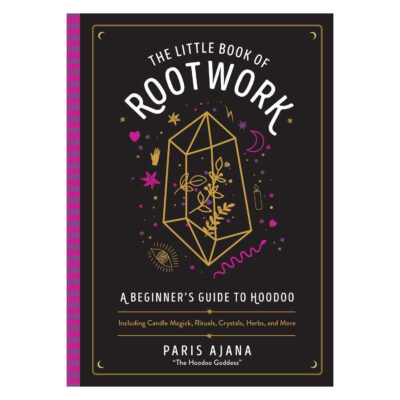
For anyone starting out, The Little Book of Rootwork: A Beginner's Guide to Hoodoo is a gentle place to begin. Our article: A Beginner's Guide to Hoodoo Rootwork walks through the foundational tools and practices in more depth.