Hyssop: Spiritual Meaning, Biblical Roots, and Ritual Uses for Purification and Uncrossing
Some herbs carry their whole history in their scent. Pick up a sprig of hyssop and hold it close, and you get something clean and sharp and ancient, a fragrance that feels like it belongs in a temple, not a garden. That feeling is not accidental. Hyssop has been used for purification, consecration, and spiritual cleansing for longer than most spiritual traditions have existed. It was ancient when the Bible was written. It was already a ritual herb when the Romans were building their roads.
It is also, for many practitioners in Hoodoo and folk Catholic tradition, the single most powerful cleansing herb available. Not the most dramatic. Not the most exotic. The most trusted. The one you reach for when the contamination is deep, when other cleanses have not held, when what you are carrying needs more than sage smoke and good intentions to release.
This article covers what hyssop is, where its spiritual reputation comes from, and how to use it in ritual baths, floor washes, and purification work.
What Is Hyssop?
Hyssop, known scientifically as Hyssopus officinalis, is a small, woody herb native to Southern Europe and the Middle East. It is a member of the mint family, which explains its clean, sharp fragrance and its affinity with other purification herbs like rosemary and rue. It has been cultivated for thousands of years for both culinary and medicinal purposes. The Romans used it as a digestive aid. Medieval households strewed it on floors to purify the air. It is an ingredient in Chartreuse and Benedictine, two of the oldest herbal liqueurs in European tradition.
But hyssop's most enduring reputation has nothing to do with cooking or medicine. It is a ritual herb, one of the oldest in the world, and its use in spiritual practice predates Christianity, predates Rome, and predates written history as we understand it.
Hyssop in the Bible: The Source of Its Sacred Power
To understand why hyssop became the purification herb of choice in Hoodoo, folk Catholic practice, and broader folk magic traditions, you have to start where its sacred reputation was cemented: in the Hebrew Bible and the Christian scriptures.
Hyssop appears multiple times in sacred texts, and in each appearance, it serves the same function. It purifies. It cleanses. It separates what is contaminated from what is clean.
In Exodus, at the first Passover, God instructs the Hebrews to take a bundle of hyssop, dip it in the blood of the lamb, and strike the lintel and doorposts of their houses. The hyssop is the instrument of protection, the tool that marks the boundary between life and death. The Angel of Death passes over the homes marked with hyssop. It is the earliest known use of hyssop as a spiritual protector.
In Leviticus, God commands the use of hyssop in the purification of lepers and of houses contaminated by mold or illness. Hyssop bound with cedar wood and scarlet thread was dipped in water and used to sprinkle the person or place being cleansed. The ritual was specific, formal, and non-negotiable. Hyssop was not one option among many. It was the prescribed instrument of purification.
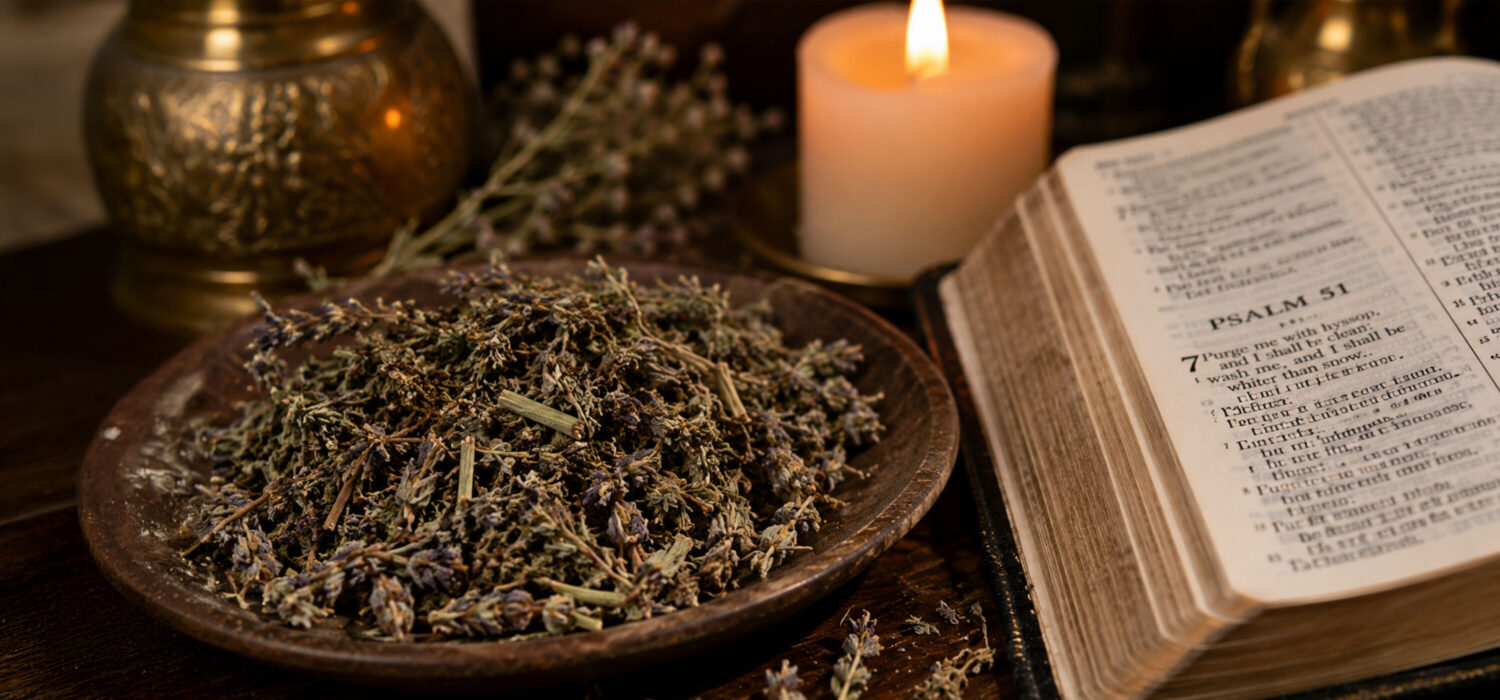
In Psalm 51, the most famous and most personally felt of David's prayers, the repentant king cries out: "Purge me with hyssop, and I shall be clean; wash me, and I shall be whiter than snow." This verse is why hyssop entered the Christian tradition as a symbol of spiritual cleansing and why it became the herb most associated with absolution, remorse, and the washing away of sin and guilt. For centuries, Christian clergy used hyssop branches to sprinkle holy water during consecration and blessing ceremonies.
In the Gospel of John, at the crucifixion, a sponge soaked in sour wine is lifted to Jesus on a branch of hyssop. Even at the end, hyssop is present at the most sacred and sacrificial moment in the Christian narrative.
This is not a botanical coincidence. Hyssop was chosen, over and over, for the moments that mattered most. That accumulated spiritual weight is why it arrived in the Americas through the hands of enslaved Africans, European missionaries, and indigenous healers and found its way into the Hoodoo, folk Catholic, and Espiritismo traditions that are practiced today.
Hyssop in Hoodoo and Folk Spiritual Practice
In the Hoodoo rootwork tradition that developed in the American South, hyssop carries a very specific and well-defined role. It is the herb you use when you need to be spiritually clean in the deepest sense. Not just cleared of outside interference, but washed of your own accumulated spiritual weight. The guilt of things done, the residue of difficult workings, the contamination that comes from prolonged contact with negative situations or people.
The Hoodoo prescription for hyssop is almost always a bath, and it almost always involves Psalm 51. You brew the herb, you add it to the bathwater, and you recite David's prayer as you wash. The connection between the psalm and the plant is considered essential, not decorative. The words and the herb work together. One without the other is incomplete.
In folk Catholic and Espiritismo tradition, hyssop appears in limpias and spiritual cleansings, particularly for people who have been exposed to heavy negative energy or who carry a spiritual burden they cannot seem to shed through ordinary prayer. It is also used to consecrate and purify ritual objects, altars, and sacred spaces before important ceremonies.
In Sicilian folk magic, hyssop is used specifically to avert the evil eye. In broader European folk tradition, it was strewn across thresholds to keep illness and malevolent spirits from entering a home.
The through line across all of these traditions is the same. Hyssop does not just push negative energy away from the surface. It washes. It penetrates. It cleanses from the inside out.
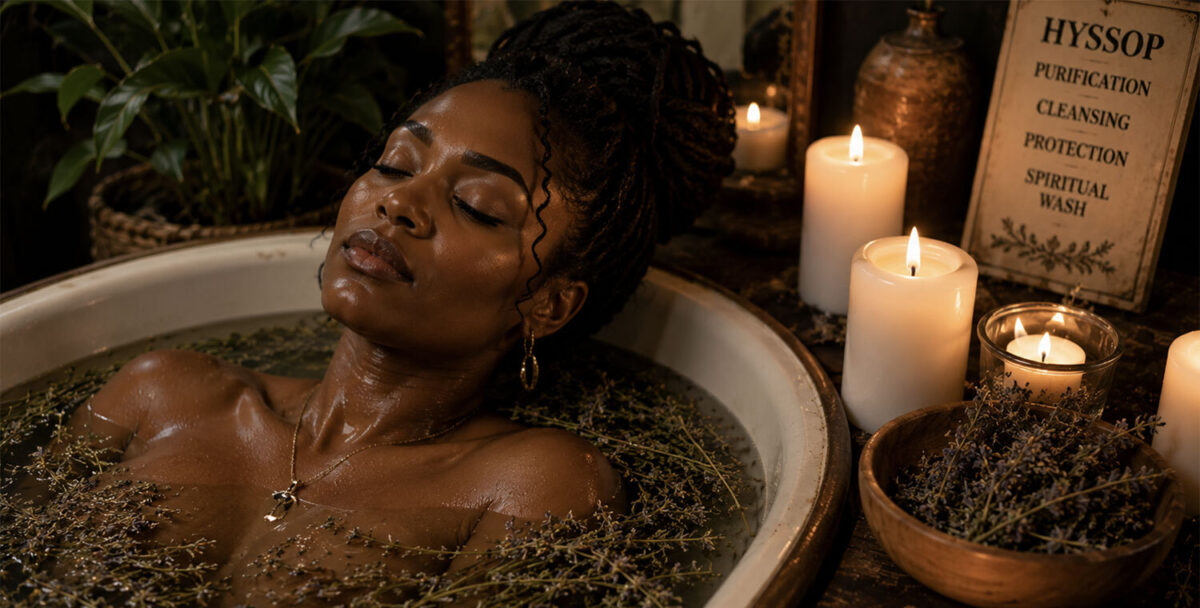
Hyssop cleansing is traditionally paired with Psalm 51: the herb and the prayer working together to wash away spiritual burdens and restore purity.
Hyssop's Spiritual Properties and Correspondences
Understanding what hyssop does energetically helps you work with it more intentionally.
Purification and absolution are hyssop's primary spiritual functions. It is the herb for removing spiritual contamination at its root, not just masking or displacing it. Where sage clears a space and rue protects, hyssop washes clean. The distinction matters when you are choosing what to use.
Uncrossing is a closely related use. Hyssop baths are one of the most traditional methods for lifting a crossed condition, used in Hoodoo alongside uncrossing salts and candle work. Our article on how to break a hex and uncross yourself covers the broader uncrossing tradition.
Protection is a secondary property. Once hyssop has cleansed, it leaves a quality of spiritual clarity behind that makes it harder for negativity to reattach. Combined with rue, it forms one of the most traditional protective pairings in the folk magic tradition.
Spiritual clarity and connection are also associated with hyssop. Practitioners who work with it regularly report that it seems to clear the spiritual static that accumulates in daily life, making prayer feel more direct, intuition sharper, and spiritual communication cleaner.
Planetary and elemental correspondences: Hyssop is traditionally associated with Jupiter, reflecting its biblical connection to divine purification and its role in consecrated religious ritual. Some practitioners associate it with the Moon because of its cool, sharp scent and its white-flowered varieties. Elementally, it is most often assigned to Air, which fits both its fragrance and its history as a purifier of the atmosphere in spaces where illness and contamination had taken hold.
How to Use Hyssop in Spiritual Practice
Hyssop works in water, in oil, and in smoke. Each form reaches something slightly different. Here is how to use all of them.
The Hyssop Purification Bath
This is the foundational hyssop ritual in Hoodoo tradition and the one most directly descended from the biblical practice of cleansing with hyssop and water. It is used for deep spiritual cleansing, for removing a crossed condition, for washing away guilt or spiritual contamination, and for preparing yourself before important ritual work.
You will need the following components to perform this ritual.
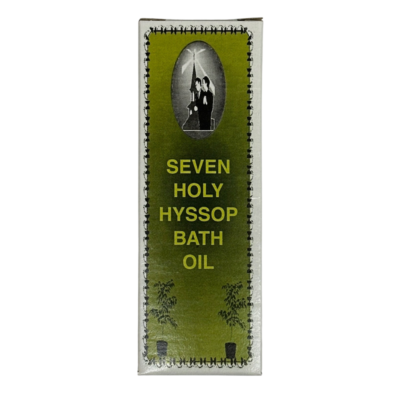
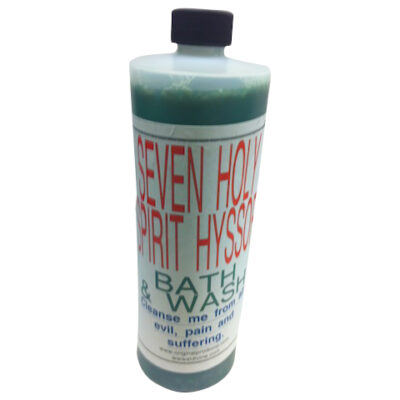
- 7 Holy Hyssop Bath
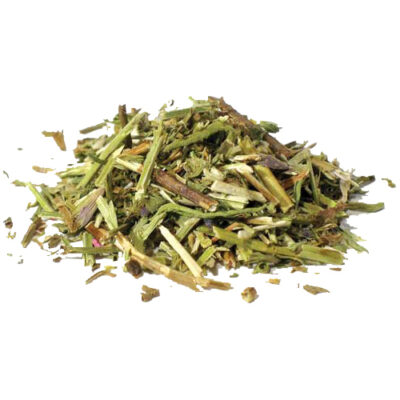
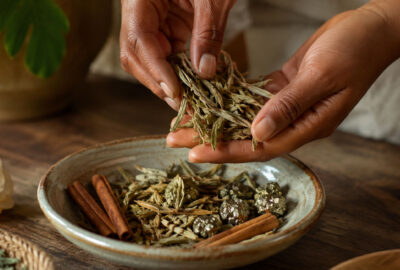
- Optional: a handful of Hyssop Herb brewed as a strong tea and added to the bathwater
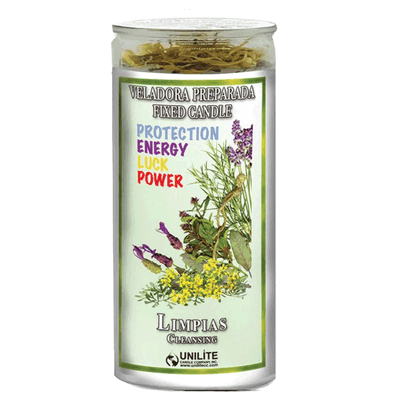
- Spiritual Cleansing 14 Day Prepared Candle
- A copy of Psalm 51 or the words memorized
- Clean white clothing to change into after the bath
Draw the bath and add your hyssop bath product. If you are working with dried Hyssop Herb, brew a strong tea by steeping two tablespoons of the dried herb in two cups of boiling water for fifteen minutes, strain it, and pour the tea directly into the bathwater.
Light the candle before you step in. Stand over the bath for a moment and speak your intention aloud. Name what you are washing away. Be specific. The bath works more powerfully when you give it something precise to address rather than a general sense of heaviness.
Lower yourself into the water. Begin reciting Psalm 51, either from memory or from the page. The key verse is verse 7:
Purge me with hyssop, and I shall be clean.
Wash me, and I shall be whiter than snow.
Let the words move through you as the water moves around you. Picture the contamination, the guilt, the crossed condition, whatever you have named, releasing from your body and dissolving into the water.
When you feel the cleansing is complete, stand and allow yourself to air dry rather than towel off. Put on clean white clothing if you have it. Dispose of the bathwater down the drain or, for serious conditions, take a small amount outside and throw it over your left shoulder away from your home.
For persistent conditions or after particularly heavy spiritual work, repeat the bath for seven consecutive days.
The Hyssop Floor Wash for Home Purification
When a space has accumulated negative energy, hosted conflict, housed illness, or been exposed to spiritual interference, a hyssop floor wash purifies the environment the same way the bath purifies the body. The [Seven Holy Hyssop Big Al Bath & Floor Wash] is formulated specifically for this purpose.
As you prepare, collect these sacred items.
- Seven Holy Hyssop Big Al Bath & Floor Wash
- Clean water in a bucket
- Optional: a handful of Hyssop Herb brewed as a tea and added to the wash water
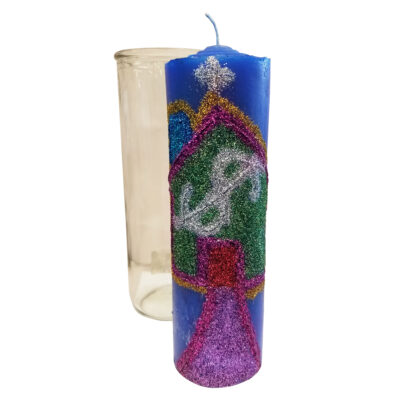
- A House Blessing Hand Carved Candle
- A mop or cloth
Before you begin, open every window in the home. Fresh air moving through assists the cleansing and gives the displaced energy somewhere to go.
Mix the floor wash into your bucket of clean water. Begin at the back of the home, the point farthest from the front door, and work forward toward the entrance. As you mop, recite Psalm 51 or simply speak your intention aloud: naming what you are removing from the space and what you are inviting in its place. When you reach the front door, mop the threshold itself and then the step outside it.
Light your candle near the entrance when you are finished and let it burn for at least an hour. Leave the windows open. Let the space breathe.
Hyssop Oil for Consecration and Cleansing Ritual Tools
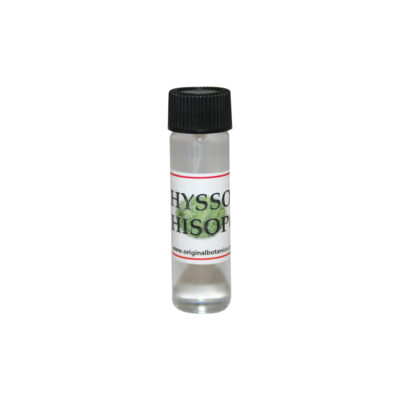
Hyssop Oil is particularly suited for consecrating ritual objects, purifying altar items acquired secondhand, and anointing candles used in purification or uncrossing work. Oil carries intention into surfaces in a way that water does not always reach.
Apply a small amount of Hyssop Oil to your fingertips and work it over the object you are consecrating, moving from the base upward or from the outside edges inward, depending on whether you are clearing something out or drawing something in. Speak your intention as you anoint. For altar items, a simple statement is sufficient:
I consecrate this object to sacred purpose.
What was held here before is released.
This belongs now to the work.
For candles in uncrossing or purification rituals, anoint with Hyssop Oil before lighting, working from the base of the candle upward toward the wick to draw the purification toward you.
Hyssop and Rue: The Classic Protection Pairing
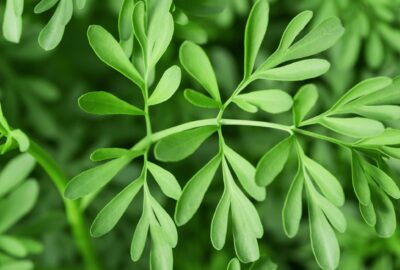
In the folk magic tradition, hyssop and rue used together form one of the most powerful combinations for both purification and ongoing protection. Hyssop washes clean. Rue guards what has been cleaned. Used in sequence, they address both the removal of negative energy and the prevention of its return.
After a hyssop bath or floor wash, a rue follow-up deepens and extends the protection. Our article on the spiritual uses of rosemary covers related purification herbs that work well alongside hyssop in a complete cleansing protocol.
Frequently Asked Questions About Hyssop
What is hyssop used for spiritually?
Hyssop is used primarily for purification, uncrossing, and the removal of spiritual contamination. It is one of the oldest ritual cleansing herbs in existence, used in biblical tradition, Hoodoo rootwork, folk Catholic practice, and European folk magic for washing away sin, guilt, crossed conditions, and negative energy that has attached to a person or a space.
What does the Bible say about hyssop?
Hyssop appears multiple times in the Bible as an instrument of divine purification. In Exodus, it is used to mark the doorposts at Passover. In Leviticus, it is prescribed for cleansing lepers and contaminated houses. In Psalm 51, David prays to be purged with hyssop and made clean. In the Gospel of John, hyssop is the branch used to lift the sponge to Christ at the crucifixion. In every appearance, it serves as a vehicle of purification and consecration.
How do you use hyssop in a spiritual bath?
Brew dried hyssop as a strong tea, steep for fifteen minutes, strain, and add to bathwater along with a formulated hyssop bath product. Enter the bath with clear intention, recite Psalm 51 or state your purification intention aloud, and visualize the contamination releasing into the water. Air dry after the bath and dispose of the water appropriately. Repeat for seven consecutive days for persistent conditions.
What is the difference between hyssop and other cleansing herbs like sage or rue?
Sage is primarily used for clearing energy from a space through smoke. Rue is primarily protective, guarding against the evil eye and negative intention. Hyssop is the deepest purification herb of the three: it washes rather than clears or guards. When a condition requires more than surface clearing, hyssop is the traditional choice. Many practitioners use all three in sequence for comprehensive spiritual cleansing.
Is the hyssop in the Bible the same as the hyssop sold today?
This is a genuine botanical question. The exact species used in ancient Israel is debated among scholars. The most commonly accepted candidate is Origanum syriacum, a species of oregano native to the region, rather than Hyssopus officinalis, which is what is sold commercially today. However, Hyssopus officinalis has been used under the name hyssop in European and American folk magic tradition for centuries and carries the full weight of that accumulated spiritual use. For ritual purposes, the commercial hyssop you find in a botanica is the appropriate material.
Can hyssop be used after performing difficult spiritual work?
Yes. One of hyssop's traditional uses in Hoodoo is specifically for cleansing a practitioner after performing a working that involved heavy or negative energy. The hyssop bath washes away any residue that may have adhered to the practitioner during the work, restoring spiritual clarity and preventing any of that energy from lingering.
Hyssop has been in this work longer than almost anything else. Longer than any tradition currently practicing has existed. It was in the water that the Hebrews carried out of Egypt. It was in the hands of the medieval monks who copied the psalms that carried its name forward. It was in the bathwater of generations of Hoodoo practitioners who learned from their elders that some things require more than smoke and intention to release.
What it offers has never changed. You bring it what is soiled. It washes. That is the whole of it, and it has always been enough.