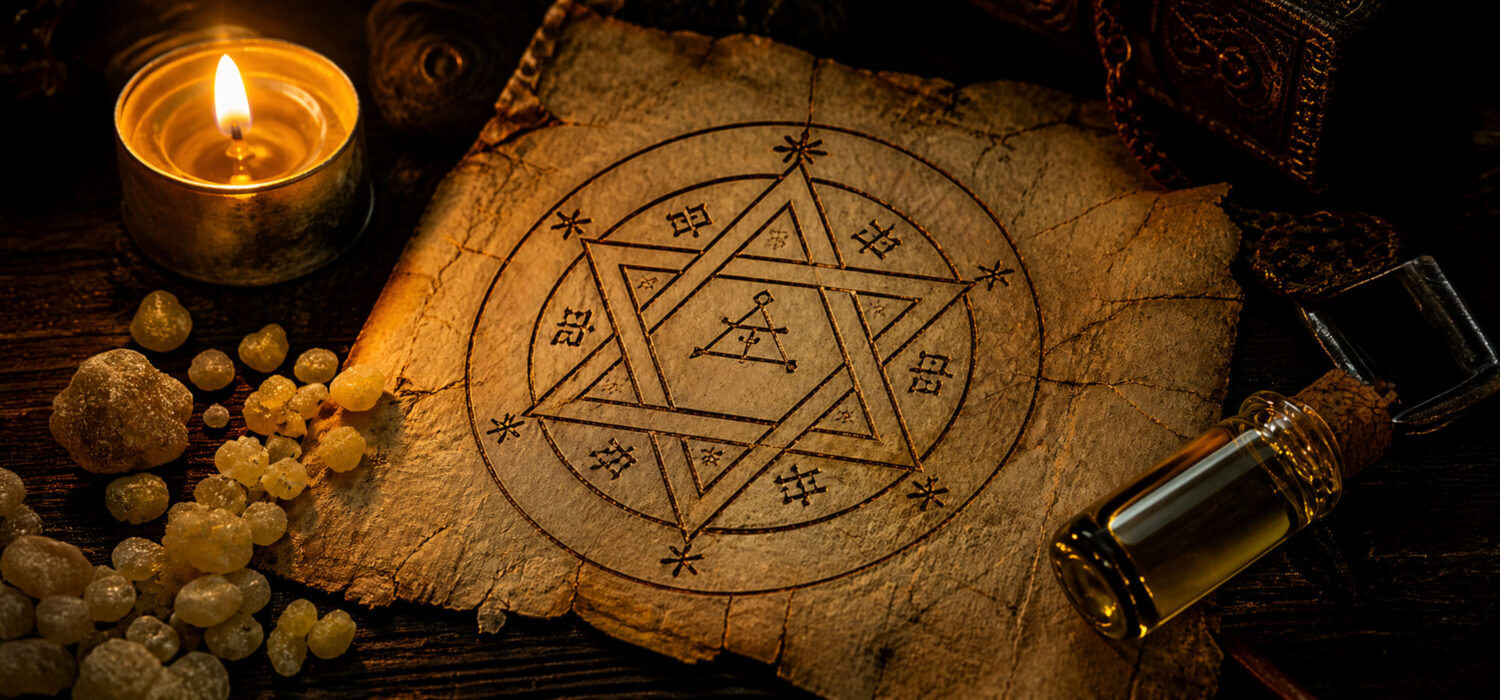
The Seal of Solomon: Meaning, History, and How to Use It in Spiritual Practice
Walk into any botanica. Flip through any grimoire. Browse any collection of protective talismans. You will find it. Two triangles interlocked into a six-pointed star, radiating outward in perfect geometric balance. Most people recognize the shape. Far fewer know the full weight of what it carries.
The Seal of Solomon is one of the oldest and most widely used protective magic symbols in the world. It has traveled across millennia and across faiths. Jewish mysticism, Islamic spiritual tradition, European formal ritual magic, and the Hoodoo practices of the African diaspora have all embraced it. Each tradition found something different in it. All of them found it powerful.
Understanding this symbol means understanding something real. It speaks to the nature of spiritual protection, wisdom, and the connection between the human world and the forces that move through it. For practitioners who work with it today, that understanding is what makes the difference between wearing a symbol and actually working with one.
What Is the Seal of Solomon?
The Seal of Solomon is a six-pointed star formed by two overlapping triangles, one pointing up and one pointing down. Used for thousands of years across Jewish mysticism, Islamic tradition, Western occult practice, and Hoodoo rootwork for protection, wisdom, and spiritual authority.
- Also known as: The hexagram, Star of Solomon, Ring of Solomon
- Primary spiritual uses: Protection, wisdom, commanding spirits, banishing evil, drawing divine power
- Traditions that use it: Judaism, Islam, Kabbalah, Western formal ritual magic, Hoodoo, folk Catholicism
- Key product forms: Talismans, amulets, seals, oils, incense, printed seals for petition work
- Often confused with: The Star of David (see below for the distinction)

The Seal of Solomon is one of the oldest and most widely used protective symbols in the world.
Who Was King Solomon?
Before the symbol, there was the man, and understanding him gives the seal its full meaning.
King Solomon reigned over Israel in the 10th century BCE. He was the son of King David, and by every account, he possessed something rare among rulers: he valued wisdom above all else. God appeared to Solomon in a dream and offered him whatever he desired. Solomon did not ask for wealth or military power. He asked for the wisdom to govern justly. That choice, and the divine gift that followed, became the foundation of his legend.
In the Bible, Solomon is known as the builder of the first Temple in Jerusalem, a structure so vast and intricate that later traditions claimed no human labor alone could have accomplished it. In the Quran, Solomon is a prophet granted sovereignty over wind, animals, and spirits. He could speak the language of birds and command forces beyond ordinary human reach. In Jewish mystical tradition, he is the master exorcist and keeper of divine names. The texts written in his name shaped Western occultism for centuries.
What made Solomon legendary was not his power alone. It was that his power came from wisdom. He did not seize what he wanted through force. He received it through humility, devotion, and the right asking. That is a spiritual teaching as much as a historical fact, and it is one that practitioners carry into their work with his seal today.
What the Seal of Solomon Actually Is
The Seal of Solomon is a hexagram, two equilateral triangles overlapping each other, one pointing upward and one pointing downward, forming a six-pointed star.
The geometry is not decorative. Each triangle carries meaning.
The upward-pointing triangle stands for the spiritual realm, the divine, the heavens, fire, and the aspirations of the human soul reaching toward God. In Kabbalistic tradition, it stands for chesed, divine loving-kindness flowing downward into the world.
The downward-pointing triangle stands for the material world, the earth, water, and the physical plane of human experience. It is the world of matter reaching upward toward the divine.
Together, the two triangles stand for the union of opposites: heaven and earth, spirit and matter, the seen and the unseen. The six points of the star correspond to the six directions, north, south, east, west, above, and below, suggesting a symbol that encompasses all of space and all of creation.
In formal ritual magic and Kabbalistic tradition, the hexagram is also linked to the six classical planets (excluding the sun and moon, which occupy different positions in the system) and with Tiferet, the sixth sephirah on the Tree of Life, which stands for beauty, harmony, and the heart of creation.
Solomon is said to have worn this symbol as a ring. It was a seal engraved with divine names that gave him authority over spirits, demons, and angels alike. The ring was not merely jewelry. It was a key.
The Seal Across Spiritual Traditions
Few symbols have traveled as widely as the Seal of Solomon while retaining their essential meaning. Here is how different traditions have understood and used it.
In Jewish Mysticism and Kabbalah
In Kabbalistic tradition, the hexagram stands for the union of the divine and the earthly, the six days of creation, and the six directions of space. It appears in the Zohar and other mystical texts as a symbol of divine protection and spiritual balance. Jewish amulet traditions, especially in North Africa, the Middle East, and the Mediterranean, used the hexagram widely for guard against evil spirits, the evil eye, and illness. The symbol was inscribed on doorposts, engraved on amulets, and written on protective papers.
In Islamic Tradition
The Seal of Solomon, known as Khatam Sulayman in Arabic, is deeply embedded in Islamic spiritual practice. Solomon is a prophet in the Quran, and his ring is described as the source of his authority over jinn, spiritual beings both good and harmful. The hexagram appears in Islamic art, architecture, and talismanic tradition. You can find it across Morocco, Turkey, Persia, and beyond. It is used for protection, for commanding spiritual forces, and as a general symbol of divine favor and sovereignty.
In Western Ceremonial Magic
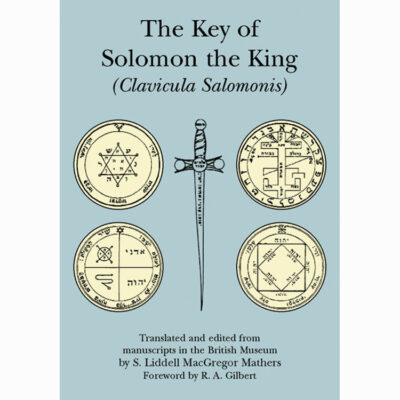
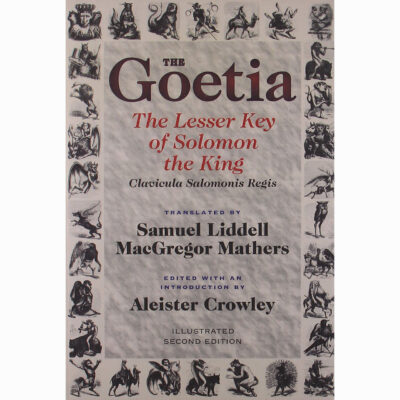
European occultists of the medieval and Renaissance periods elevated Solomon to almost legendary status. Texts attributed to him, most notably The Key of Solomon and The Goetia: The Lesser Key of Solomon, became foundational grimoires for formal ritual magic. These texts describe how to use Solomonic seals, divine names, and ritual procedures. The goal is to summon, bind, and command spiritual forces. The hexagram became a central symbol in this tradition, used in ritual circles, on magical tools, and in the construction of talismans.
The 72 Seals of Solomon, with each sigil attributed to specific spirits described in the Goetia, emerged from this tradition. Each seal was said to stand for and command a particular spirit or force. Practitioners used them for everything from gaining hidden knowledge to winning legal disputes, healing illness, and compelling love.
In Hoodoo and African Diaspora Traditions
The Seal of Solomon traveled into American Hoodoo through the grimoire tradition and through the spiritual culture of enslaved Africans and their descendants, who absorbed and transformed European magical texts alongside their own ancestral practices.
In Hoodoo, the Grand Symbol of Solomon is used as a petition seal, a printed symbol on which you write your desire, then carry it, place it on an altar, or use it in candle work to direct spiritual force toward your goal. Solomon seal root, the dried root of the plant Polygonatum, carries the same name and is used in protective and love workings throughout Hoodoo tradition.
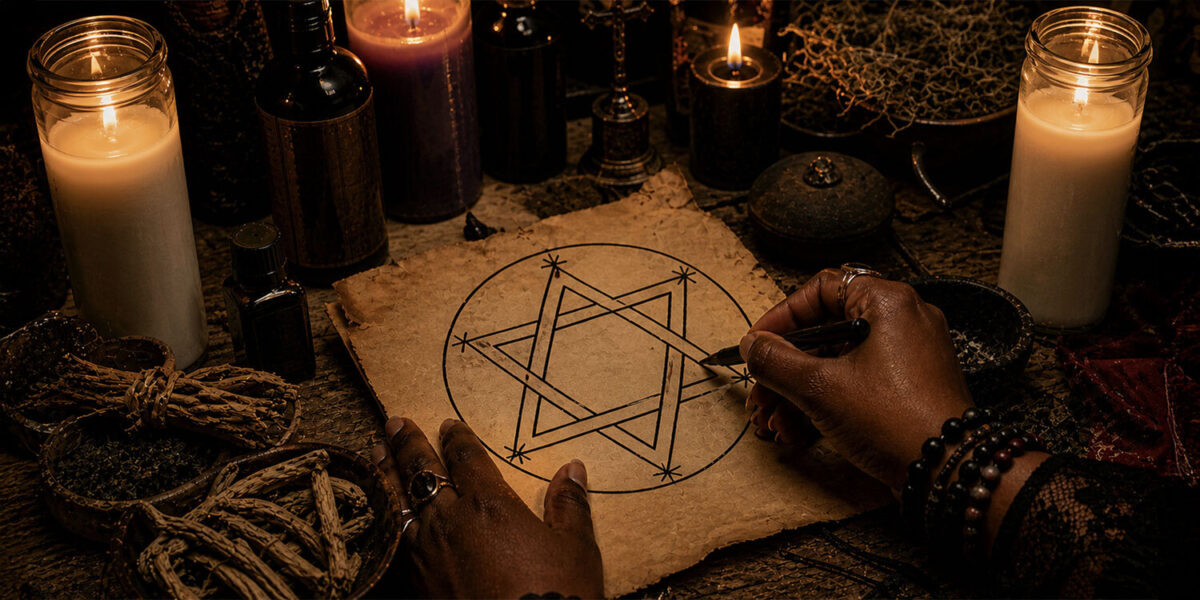
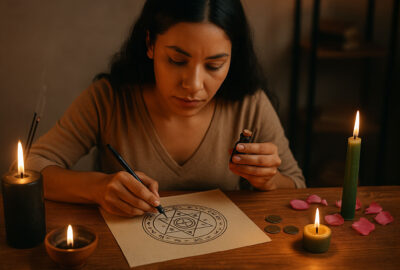
A hoodoo practitioner inscribes intention into the Seal of Solomon, surrounded by candlelight, roots, and sacred tools of power.
The Seal of Solomon vs. The Star of David
This is one of the most searched questions about this symbol, and it deserves a clear answer.
They are the same shape but not the same symbol.
The six-pointed star appears in both contexts. But the meaning and history attached to each name are distinct.
The Star of David (Magen David in Hebrew, meaning "Shield of David") is the symbol of Jewish identity and appears on the flag of Israel. Its connection with the Jewish people as a cultural and national symbol became prominent in the 17th century and was widely adopted by the 19th century. It stands for Jewish heritage, identity, and community.
The Seal of Solomon refers to the same geometric form, but through a different lens, the magical and mystical tradition surrounding King Solomon directly. When the symbol appears on a talisman, a grimoire, or a spiritual product, it draws on Solomon's legend as a magician, prophet, and commander of spirits. The protective and magical properties attributed to the seal come from Solomon's story, not from the Star of David's cultural meaning.
The two can overlap; a Jewish practitioner may experience the Star of David and the Seal of Solomon as connected, but they carry different histories and are used in different contexts. When you work with the Seal of Solomon, you call on the specific power of Solomon's wisdom. You invoke his divine authority and his mastery over spiritual forces.
The 72 Seals of Solomon
The 72 Seals of Solomon are each sigils, each linked to a specific spirit or force described in the Goetia, the most famous section of The Lesser Key of Solomon. The Goetia lists 72 spirits, some described as kings, dukes, or princes of the spirit world, each with specific abilities, forms, and areas of influence.
Each spirit has its own seal, a unique geometric sigil that serves as its spiritual signature and point of contact. These seals were used in formal ritual magic to summon, bind, and direct the specific force linked to each spirit.
The abilities attributed to these 72 forces range widely. Some were said to teach knowledge of herbs, languages, and philosophy. Others were linked to commanding love, uncovering hidden truths, winning battles, or revealing the location of lost things. Still others were called upon for protection, healing, or the binding of enemies.
In modern spiritual practice, the 72 seals are most often approached through the broader Solomonic tradition rather than the full formal ritual protocols of the Goetia. Practitioners may use a specific seal as a focal point in meditation, inscribe it on a candle or petition paper, or incorporate it into protective work. The Key of Solomon and The Goetia: The Lesser Key of Solomon remains the primary source text for anyone seeking to understand this system in depth.
These texts and the forces they describe require serious study, respect, and spiritual preparation. They are not casual tools.
Approaching them with genuine reverence and a clear spiritual foundation is essential.
How the Seal of Solomon Is Used in Spiritual Practice Today
The Seal of Solomon has found its way into everyday spiritual practice through several forms, each accessible and deeply rooted in tradition.
As a Talisman or Amulet
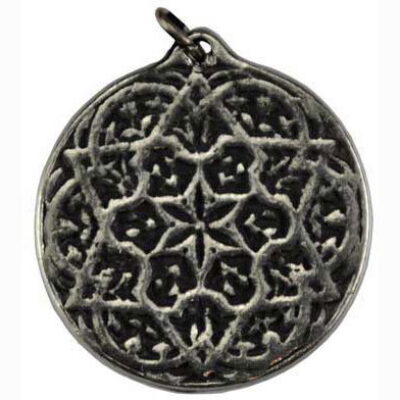
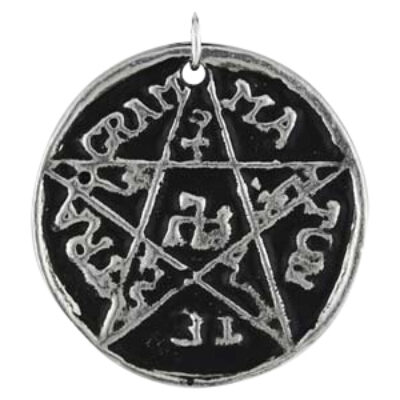
The most common use. A Seal of Solomon Amulet worn on the body carries the symbol's protective power at all times. Placed in the home, it works the same way. Amulets inscribed with the seal are by tradition used for guarding against evil forces, spiritual attack, harmful spirits, and the evil eye. They are also worn to draw wisdom, clarity, and divine favor to the wearer.
To learn more about how magical symbols function as protective tools, visit our complete guide to magical symbols and their meanings.
As a Petition Seal
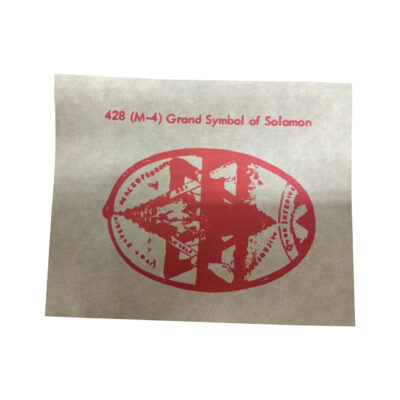
The Grand Symbol of Solomon is a printed seal used in rootwork and folk magic. It is one of the most practical tools in this tradition. Write your desire on the back of the seal. Hold it between your hands and speak your intention clearly. The seal focuses your spiritual energy. It directs the force of Solomon's wisdom toward your specific goal. Carry it with you, place it beneath a candle, or keep it on your altar.
With Oils and Incense
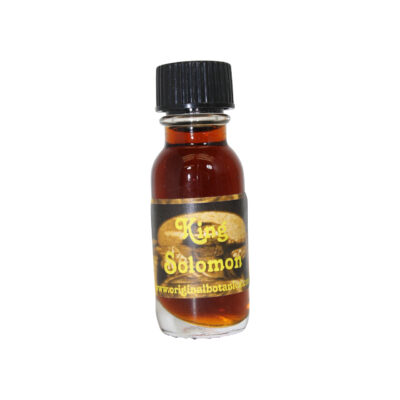
Anointing a talisman with King Solomon oil brings it to life, and blesses and activates it, linking the physical object to the spiritual force it stands for. King Solomon incense burned during ritual or meditation creates an atmosphere open to wisdom, divine guidance, and spiritual clarity. These are not decorative additions; they are functional tools in the same tradition that produced the talismans themselves.
With Solomon Seal Root
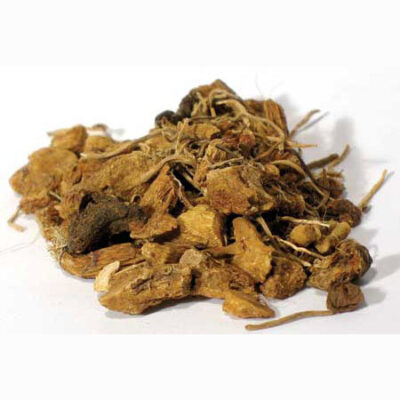
The root of the Solomon's seal plant carries the spiritual properties of its namesake in herbal form. In Hoodoo and rootwork tradition, Solomon seal root guards against harm. Place it near doors and windows to keep harmful forces out of the home. Ground and mixed with King Solomon incense powder, it strengthens any working. Brewed into a ritual bath with cleansing herbs, it removes spiritual attachments, hexes, and crossed conditions. It is also by tradition used in love workings and as an aid to wisdom and memory.
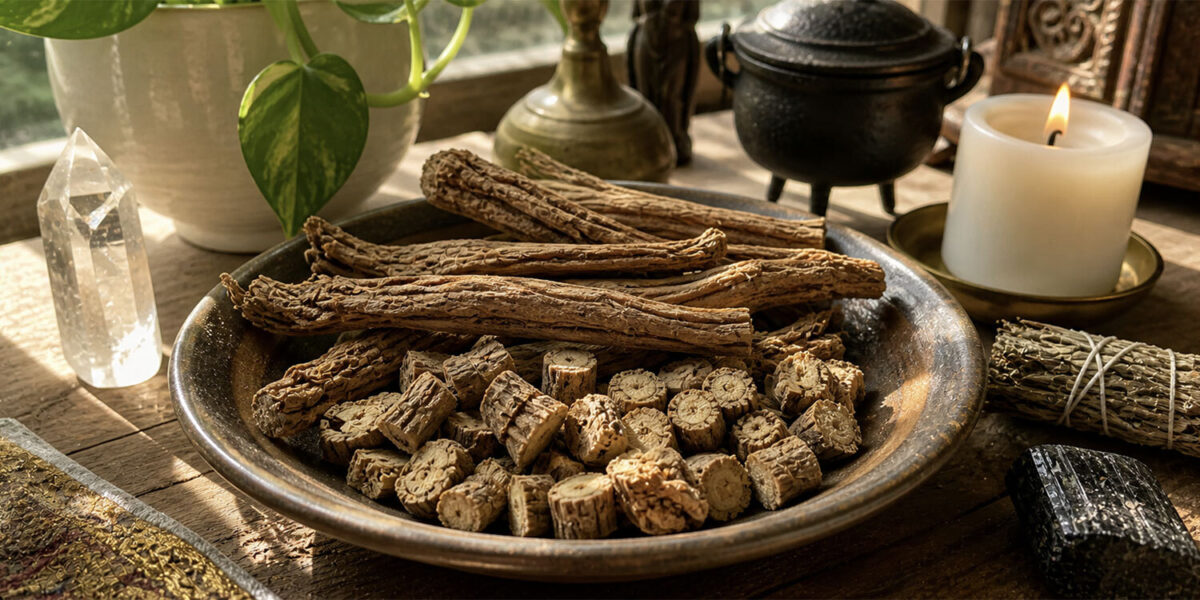
Solomon Seal Root guards against harm, and is said to help remove hexes and crossed conditions.
Three Rituals for Working with the Seal of Solomon
A Wisdom and Guidance Ritual
When you face a decision that clarity has not answered, this ritual calls on Solomon's wisdom to light up your path. Use it when ordinary thinking is not enough. It is best performed on a Wednesday, by tradition linked to Mercury and matters of the mind and speaking. You will need the following components to perform this ritual.
- A Grand Symbol of Solomon Seal (printed petition seal)
- A 3 Kings Multicolor 7 Day prayer candle or a white candle
- King Solomon oil
- King Solomon incense powder or 3 Kings incense and a charcoal burner
- A pen
- A small piece of paper
Set your altar and light your incense first, allowing the smoke to fill the space around you. This signals the beginning of the working and shifts the atmosphere toward openness.
Anoint your candle with King Solomon oil. Work the oil clockwise from the center of the candle toward the wick, then from the center toward the base. This draws the energy of wisdom and guidance toward you as the candle burns. Light the candle and sit quietly for a few moments, watching the flame steady itself.
Write your situation on the small piece of paper as clearly and honestly as you can. Not what you want to happen. What is actually in front of you. Place the paper beneath the candle.
Now take the Grand Symbol of Solomon Seal. On the back, write what you are seeking, wisdom, clarity, a direction, an answer. Hold the seal between both palms and speak your request aloud:
Solomon, wisest of the wise,
I come before you not with demands
But with an open mind and a willing heart.
Guide my understanding.
Light up what I cannot yet see.
Let your wisdom move through me
So that I may act with clarity, honesty, and purpose.
Place the seal before the candle and allow the candle to burn for at least one hour each day until it is finished. Carry the seal with you during this time. Pay attention to what arises. In your thoughts, in conversations, in dreams. Wisdom does not always arrive in dramatic ways. Often it comes quietly. Something you suddenly understand that you did not understand before.
Protection from Evil and Spiritual Attack
This ritual uses the Seal of Solomon's oldest purpose: protection. It guards against harmful spiritual forces, enemies who wish you ill, and negative energy sent your way, whether on purpose or not. Solomon's authority over spirits makes his seal one of the most powerful tools for this kind of work. Gather the following ingredients before beginning.
- A Pentagram of Solomon amulet or Solomon's Seal talisman
- King Solomon oil
- King Solomon incense powder
- Solomon seal root (whole pieces)
- A black candle
- Sea salt
- A small bowl of water
Light the incense and pass your amulet or talisman slowly through the smoke, allowing it to be cleansed of any energy it has absorbed. Set it before you.
Add a pinch of sea salt to your bowl of water and stir clockwise three times. Dip your fingertips into the salt water. Touch each corner of the room, beginning in the east and moving clockwise. As you do, speak clearly:
By the wisdom and authority of Solomon,
I seal this space against all that would harm.
Nothing that means ill may enter here.
Return to your altar. Anoint the amulet with King Solomon oil, rubbing it in a slow circular motion. Light the black candle beside it. As the candle burns, place small pieces of Solomon seal root near each entrance to your home, at the front door, back door, and beneath windowsills. These roots act as spiritual sentinels. They hold the protective field steady between cleansings.
Hold the anointed amulet in both hands and speak your protection:
I wear this seal as Solomon wore his ring.
Let it stand between me and all harm.
Let it turn back what is sent against me.
I am protected by wisdom, sealed by divine authority, and shielded by grace.
Wear the amulet daily. Anoint it with a fresh drop of King Solomon oil each week to maintain its charge. Replace the Solomon seal root near your doors at each new moon.
Petition Ritual for Power and Achievement
Solomon's legend is a story about what becomes possible when wisdom is put to use. This ritual works with that energy to support a specific goal. A career move, a business, a creative project, any situation where you need clarity and the power to act on it. As you prepare, collect these sacred items.
- A Grand Symbol of Solomon Seal
- King Solomon oil
- King Solomon incense powder
- A gold candle or yellow candle
- A pen with gold or black ink
- A Solomon's Seal talisman
Light the incense and allow yourself a few minutes of quiet. Consider what you are working toward. Not just the outcome you want. Think about the kind of person you need to become to achieve it. Solomon's power came from wisdom, not from force. Ask yourself what wisdom this situation requires of you.
Anoint the gold candle with King Solomon oil from base to wick, drawing the energy of achievement and divine favor upward and toward you. Light the candle.
On the back of the Grand Symbol of Solomon Seal, write your goal in clear, positive language. Not what you want to avoid. What you are calling in. Beneath it, write three qualities you are committing to bring: discipline, integrity, patience, courage, or whatever your situation honestly requires.
Pass the Solomon's Seal talisman through the incense smoke, then anoint it with a drop of King Solomon oil. Hold it over the candle flame briefly, not in the flame, but close enough to feel its warmth, and speak your intention:
As Solomon built what could not be built and knew what could not be known, I call on that same wisdom to move through my hands and my mind. I am clear in my purpose. I am committed to my work. Let every obstacle become a lesson and every delay become preparation. What I am building, let it stand.
Place the seal beneath the candle and the talisman beside it. Allow the candle to burn each day until finished. Carry both the seal and the talisman with you as you work toward your goal. When the goal is achieved, give thanks and allow the seal to be disposed of respectfully, buried in the earth, or released in moving water.
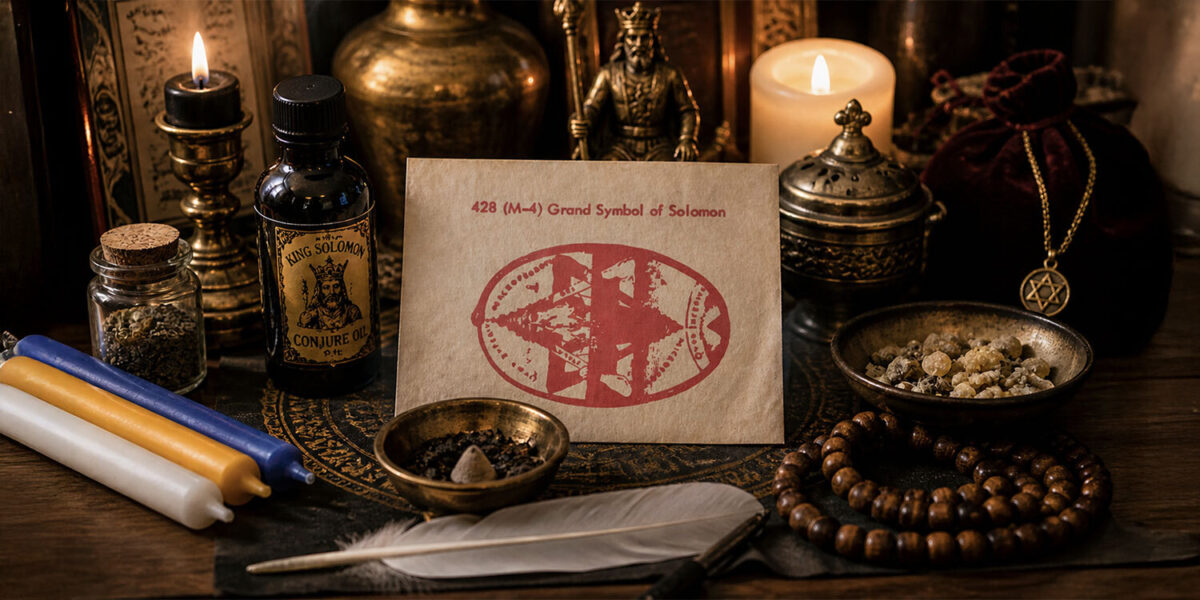
The M-4 Grand Seal of Solomon channels protection, authority, and focused spiritual intent.
What Working with Solomon Teaches
Every tradition that has engaged with Solomon's legacy, Jewish, Islamic, occult, Hoodoo, arrives at the same essential teaching: wisdom is the source of real power.
Solomon did not ask for armies. He did not ask for gold. He asked to understand, and everything else followed from that. The seal he left behind carries that principle in its geometry. Two triangles in balance. The spiritual and the material, the seen and the unseen, held together not by force but by harmony.
When you work with this symbol, you are not commanding the universe to obey you. You are aligning yourself with the wisdom that understands how the universe works. That is a more humble position, and a far more powerful one.
Simple Daily Practices for Connecting with Solomon's Wisdom
- Wear a Solomon talisman consistently and anoint it weekly with King Solomon oil
- Keep a piece of Solomon seal root near your front door to maintain ongoing spiritual protection
- Burn a small amount of King Solomon incense before any important decision or conversation
- When facing difficulty, sit with the hexagram symbol for a few moments before reacting, let the geometry of balance remind you that every situation has two sides
- Study the source texts when you feel ready: The Key of Solomon the King and The Goetia: Lesser Key of Solomon are the foundational resources for anyone serious about this tradition
Frequently Asked Questions About the Seal of Solomon
What is the difference between the Seal of Solomon and the Star of David?
They are the same geometric shape, the six-pointed star formed by two overlapping triangles, but they carry different meanings in different contexts. The Star of David is the symbol of Jewish cultural and national identity. The Seal of Solomon refers directly to the magical and mystical tradition surrounding King Solomon as a prophet, magician, and commander of spirits. One is a symbol of heritage; the other is a symbol of spiritual authority. They overlap in some Jewish mystical traditions but are distinct in their primary use and meaning.
Is it safe to work with the Seal of Solomon if I am not Jewish or Muslim?
Yes. The Seal of Solomon has been used across many traditions for thousands of years, including by practitioners with no connection to Judaism or Islam. Hoodoo, Western formal ritual magic, and folk spiritual practice have all included this symbol respectfully and well. Approach it with genuine reverence, take time to understand its history and meaning, and work with it as a serious spiritual tool rather than a casual decoration. Cultural respect and spiritual sincerity matter far more than religious background.
What is Solomon seal root, and is it the same as the Seal of Solomon?
They share the name but are different things. Solomon seal root is the dried root of the plant Polygonatum, used in Hoodoo and herbal magical practice for protection, love, and cleansing. The Seal of Solomon is the geometric symbol linked to King Solomon. The plant is named after the symbol because its root, when cut in cross-section, resembles the seal. Both carry Solomonic connections and are often used together in spiritual work, but they are distinct tools.
How do I activate or bless and activate a Solomon talisman?
The traditional method is to cleanse it first, pass it through incense smoke, or briefly submerge it in salt water to clear any energy it has absorbed in transit. Then anoint it with King Solomon oil and speak your intention over it, dedicating it to its specific purpose. Holding it in both hands and praying over it sincerely is the most important step. The ritual instructions above provide a complete blessing process for both protection and wisdom work.
Can I use the Seal of Solomon alongside other spiritual traditions I practice?
Yes. The seal's history of moving across traditions, from Jewish mysticism to Islamic practice to Hoodoo to formal ritual magic, shows its ability to adapt. If you also work with Orishas, saints, or other spiritual forces, the Seal of Solomon functions as a compatible protective symbol rather than a competing one. It is a tool of wisdom and protection that has always served practitioners from many different spiritual backgrounds.
What are the 72 Seals of Solomon?
The 72 seals are each sigils attributed to specific spirits described in the Goetia, the most studied section of The Lesser Key of Solomon. Each seal serves as the spiritual signature of one of 72 forces, each with distinct abilities and areas of influence. Working with the 72 seals requires serious study and spiritual preparation. The Goetia: Lesser Key of Solomon is the primary source text and the right starting point for anyone who wants to explore this aspect of the tradition.
Where should I place a Solomon talisman in my home for protection?
Above the main entrance to your home is the most traditional placement; it guards the threshold through which all energy enters. You can also place talismans in the four corners of a room you want to protect, or keep one on your personal altar as a permanent protective presence. Pair it with Solomon seal root near your doors for layered, ongoing protection.
The Wisdom That Endures
Thousands of years have passed since Solomon sat on his throne in Jerusalem. The texts written in his name traveled through cultures and continents. They were translated, copied, and carried by generations of practitioners who found something in them that was genuinely useful. That kind of staying power does not happen by accident.
The Seal of Solomon endures because what it stands for endures. The human longing for wisdom. The need for protection in a world full of unseen forces. The understanding that real power comes not from what you can take, but from what you can understand.
Whether you wear his seal for protection or keep his root near your door, you are taking part in a tradition that has never stopped moving. It traveled from Jerusalem to Baghdad to London to New Orleans to the Bronx. It belongs to anyone who approaches it with the humility Solomon himself modeled when he made his request.
He asked for wisdom. Everything else followed. So can it for you.