Goofer Dust in Hoodoo Rootwork: History, Meaning, and Traditional Practice
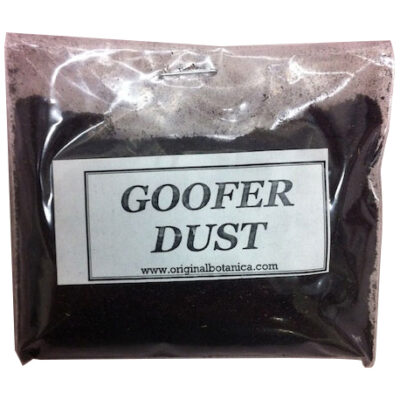
Goofer Dust is a traditional hoodoo crossing powder associated with severe banishing, enemy work, and justice-oriented spiritual practice. It is historically linked to foot-track magic and is commonly described as containing sulfur, pepper, and other harsh ingredients symbolizing heat and consequence.
Goofer Dust is one of the most formidable tools in hoodoo, traditionally associated with work meant to weaken, confuse, or severely disrupt an enemy’s influence. It emerged from African foot-track traditions and developed into a powerful working powder in Hoodoo rootwork. For generations, people turned to it when they felt they had no earthly protection. In many communities, it became a spiritual response to danger, domination, cruelty, or injustice.
Today, the powder still carries its old weight, but it also carries a teaching. Many rootworkers emphasize that intention shapes outcomes, and that serious work requires clarity, respect, and spiritual readiness. This article explores Goofer Dust through cultural history, traditional practice, and spiritual interpretation, not as a substitute for personal discernment or responsible mentorship.
What You’ll Learn in This Article
- The traditional origins and cultural meaning of Goofer Dust in hoodoo
- Core and optional ingredients found in historic and modern formulas
- Ways Goofer Dust is described in foot-track magic, jar work, and candle rites
- The differences between Goofer Dust, Hot Foot Powder, and Crossing Powder
- Safety, handling, and spiritual considerations discussed by practitioners
- Traditional categories of justice and banishing work where Goofer Dust is referenced
- Common interpretations of “movement” in the work, along with gentler alternatives
With this grounding, we can begin to explore what Goofer Dust truly is: its structure, its purpose, and the deep current of tradition that carries it into ritual practice.
What Is Goofer Dust?
Goofer Dust is a blended hoodoo powder traditionally associated with enemy work, justice-oriented workings, and severe forms of banishing. Its foundation is commonly described as harsh, fiery, and death-aligned, reflecting symbolic themes of disruption, endings, and consequence. While formulas have always differed from worker to worker, certain materials appear repeatedly across the oldest documented traditions.
Historical accounts and folkloric records commonly reference the following materials in connection with Goofer Dust:
- Sulfur powder
- Pepper powders (such as red or cayenne pepper, black pepper, or a blend)
- Powdered herbs or roots associated with decay, confusion, or harm (such as mullein, graveyard moss, asafoetida, or bitter aloes)
Together, these ingredients were understood to contribute heat, irritation, and symbolic force to the powder, shaping the character for which Goofer Dust became known in many regions.
In some regional or lineage-based practices, additional materials were incorporated, including:
- Snake skin or snake shed
- Mineral dusts or iron-based powders
- Other baneful herbs unique to a family’s practice
These additions were believed to deepen symbolic potency but were not universally present across all traditions.
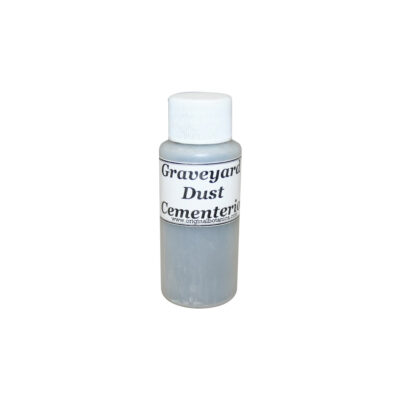
Graveyard dirt appears in certain Southern practices but was never used consistently across all forms of Goofer Dust. Some workers included it to invoke ancestral authority, while others avoided it due to ethical obligations and ritual protocols surrounding the dead. Because graveyard dirt carries its own extensive body of teaching, it is traditionally treated as a separate spiritual curio.
Traditional Uses of Goofer Dust in Hoodoo
Within hoodoo tradition, Goofer Dust is most often referenced in accounts describing efforts to bring harmful influence or oppressive situations to an end. Historical sources and oral traditions associate it with work believed to address serious, ongoing harm rather than ordinary conflict.
Common uses described in folkloric records include:
- Efforts intended to weaken an adversary believed to be causing damage
- Justice-oriented work undertaken when no other recourse was perceived to exist
- Attempts to break domination or sustained spiritual attack
- Work meant to force permanent separation or removal
- Practices associated with confusion, misfortune, or obstruction
- Measures taken to end dangerous or abusive relationships
- Foot-track traditions intended to interrupt an enemy’s path
Traditional descriptions note that Goofer Dust was placed in locations symbolically connected to a target’s movement, rest, or personal space, or incorporated into container work meant to disrupt a person’s condition. Such work was regarded as severe and final in nature, reserved for circumstances involving prolonged harm or abuse of power.
Historical Roots of Goofer Work
The word goofer is commonly traced to a Kikongo term associated with death. In the American South, to “goofer” someone referred to spiritually poisoning or harming them through contact with the earth, particularly through the feet. Foot-track traditions were widespread across many African cultures, where dust, footprints, and soil were understood to carry spiritual signatures.
In hoodoo tradition, Goofer Dust emerged as a response to cruelty and abuse of power. It became a means through which the powerless sought spiritual resistance when no social or legal protection existed. To understand Goofer Dust fully is to understand the history of survival, adaptation, and resilience that shaped hoodoo rootwork.

Southern conjure workers turn to goofer dust for serious cases where protection alone is not enough.
Traditional Beliefs About the Preparation of Goofer Dust
No single recipe has ever defined Goofer Dust within hoodoo tradition. Historical accounts emphasize that its composition varied according to the worker, the purpose of the work, and the spiritual forces they acknowledged. Rather than a fixed formula, Goofer Dust was understood as a powder shaped by intention, symbolism, and spiritual alignment.
Folkloric descriptions often emphasize the importance of selecting materials believed to correspond with heat, decay, disruption, or ancestral influence. Preparation was not viewed simply as physical mixing, but as a process in which spiritual focus, prayer, and personal authority were thought to play a central role. In this understanding, the powder’s significance extended beyond its ingredients.
Some traditions describe Goofer Dust as being spiritually “fixed” through spoken petitions, breath, or focused attention, reflecting the belief that words and intention imbued materials with meaning. These accounts frame Goofer Dust not as a neutral substance, but as one whose power was believed to arise through spiritual engagement rather than mechanical preparation.
Oral histories also note variation in approach. Some rootworkers favored preparing their own blends to honor family lineage or personal practice, while others relied on prepared powders that were later spiritually addressed. Across traditions, effectiveness was commonly understood to depend less on exact composition and more on clarity of purpose, spiritual readiness, and respect for the forces being invoked.
Traditional Beliefs About How Goofer Dust Was Understood to Work
In hoodoo tradition, Goofer Dust is commonly described in terms of contact, intention, and spiritual symbolism. Powders were understood not merely as physical substances, but as carriers of prayer, focus, and meaning within ritual work. In this framework, spoken words, breath, and focused attention were believed to shape how materials were spiritually interpreted.
Folkloric descriptions often explain Goofer Dust’s effects through symbolic pathways rather than literal mechanics. These accounts describe the powder as acting through points of contact connected to a person’s movement, rest, or personal space, reflecting broader beliefs about spiritual contagion and influence.
Traditional explanations commonly reference ideas such as:
- Contact with footprints or the soles of the feet, which were believed to carry a person’s spiritual signature
- Thresholds of beds or homes, viewed symbolically as points of vulnerability or transition
- Contact with clothing or the body, understood as linking the powder to the individual
- Spoken petitions and focused intention, believed to concentrate spiritual force
- Associations with death, decay, or fear, reflecting symbolic themes rather than literal energies
Across traditions, it was widely held that without focused intention or spiritual engagement, the powder itself remained inert. In this understanding, meaning arose not from the material alone, but from the beliefs, words, and spiritual framework brought to the work.
Traditional Warnings and Cautions Around Goofer Dust
Within hoodoo tradition, Goofer Dust is consistently described as a powder reserved for serious circumstances, not for ordinary frustration or passing anger. Folkloric teachings emphasize restraint, clarity, and moral consideration when approaching work of this nature.
Traditional cautions often note that Goofer Dust was avoided in situations such as:
- Work undertaken in moments of fresh anger or emotional volatility
- Circumstances where protection, reversal, or cleansing was believed sufficient
- Situations involving limited experience with spiritual closure or cleansing
- Cases where doubt existed regarding the moral weight of the working
- Situations in which fear of spiritual consequence outweighed certainty of purpose
Hoodoo teachings repeatedly stress that work involving Goofer Dust requires steadiness of spirit and willingness to carry responsibility through to completion. In this tradition, beginning work without readiness was viewed as a greater risk than not acting at all.
Traditional Safety Considerations for Handling Goofer Dust
Because Goofer Dust is traditionally described as containing sulfur, peppers, and mineral-based powders, historical sources and modern practitioners alike note the importance of careful handling. These materials were understood to irritate the skin, lungs, or eyes if mishandled.
Commonly cited safety considerations include:
- Use of gloves or other barriers to limit direct skin contact
- Avoidance of inhaling fine powders
- Keeping the powder away from pets and children
- Storage in sealed or closed containers
- Washing hands after contact
- Disposal of unused material outdoors rather than in household trash
These precautions reflect practical concerns surrounding the physical materials involved, rather than spiritual instruction, and were intended to reduce accidental exposure or irritation.
Goofer Dust and Salt in Hoodoo Tradition: A Comparative View
Within hoodoo practice, Goofer Dust and salt are often discussed together because both appear in floor work, threshold traditions, and foot-track beliefs. Despite this surface similarity, traditional teachings consistently describe them as serving very different symbolic and spiritual roles. Confusion between the two often arises from their shared physical form rather than their distinct purposes.
- Goofer Dust is traditionally associated with work involving cursing, justice-oriented responses, enemy conditions, and severe forms of disruption. In folklore and practice, it is described as a force connected to harm, obstruction, and decisive endings.
- Salt, by contrast, is consistently described in hoodoo tradition as a substance of cleansing and purification. It is associated with breaking crossed conditions, blessing spaces, strengthening protection, and clearing unwanted influence without directing harm toward a specific individual.
Traditional teachings emphasize that the distinction between Goofer Dust and salt reflects a broader ethical framework within hoodoo. Each substance occupies a different spiritual role, and understanding those roles was considered central to maintaining balance and intention within the work.
Goofer Dust, Hot Foot Powder, and Crossing Powder in Hoodoo Tradition
These three powders are often discussed together in hoodoo, yet traditional teachings consistently describe them as serving distinct spiritual purposes. While all are associated with disruptive or baneful work, their symbolic roles and perceived intensity differ.
- Goofer Dust is traditionally associated with harm, severe disruption, and overwhelming misfortune. Folkloric accounts describe it as a powder reserved for the most serious circumstances, where decisive endings were sought.
- Hot Foot Powder is commonly described as a formula intended to create distance. In traditional accounts, it was used to drive someone away or remove their presence without necessarily invoking illness or total ruin.
- Crossing Powder occupies an intermediate role in hoodoo tradition. It is described as bringing confusion, obstacles, accidents, or ongoing bad luck, and was often viewed as strong but less final than Goofer Dust.
Understanding how these Hoodoo sprinkling powders were distinguished in traditional practice reflects the nuanced ethical and symbolic framework within hoodoo, where different tools were associated with different kinds of spiritual response rather than interchangeable effects.
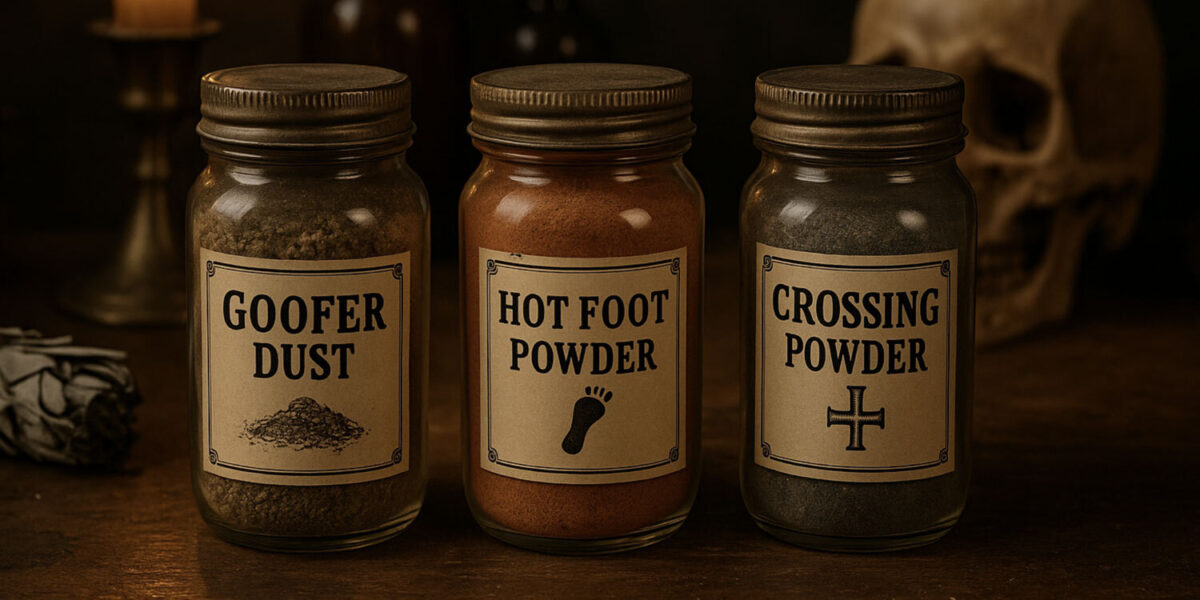
Three traditional hoodoo powders used to weaken enemies, push danger away, and stir obstacles in a harmful path.
Recorded Goofer Dust Workings in Hoodoo Tradition
Goofer Dust has long been referenced in hoodoo folklore as a powder reserved for extreme circumstances, when harm, domination, or danger were believed to require decisive spiritual response. Rather than casual spellwork, these workings were described as deliberate acts shaped by symbolism, intention, and moral weight.
The examples below reflect traditional Goofer Dust workings as they appear in folkloric accounts, oral history, and recorded practice. They are presented as documentation of how such work was described and understood within hoodoo tradition, not as prescriptive instruction. Each example illustrates how practitioners framed justice, removal, and disruption when no gentler remedy was believed sufficient.
A Justice Working Described in Hoodoo Tradition
Folkloric accounts describe justice-oriented workings performed in response to sustained harm or abuse of power. These workings were framed as serious responses rather than casual acts. Materials commonly cited in descriptions of this type of working include:
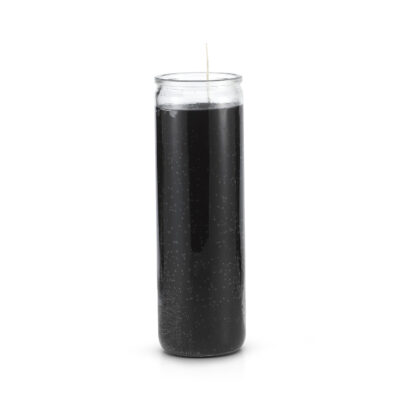
Accounts describe the candle being prepared with oils and powders while the target was named aloud. Practitioners recorded speaking firm declarative petitions asserting that harmful actions were brought to a halt. One such petition is recorded as:
I speak the truth of your deeds. Your harm ends here.
Descriptions note that the candle was allowed to burn fully, after which the remaining materials were disposed of at liminal locations such as crossroads or near iron. Cleansing afterward was emphasized as a means of restoring balance.
Foot-Track Working Described in Hoodoo Tradition
Folkloric accounts frequently describe foot-track work as a means of addressing harmful influence at its source. In these traditions, a person’s steps were believed to carry spiritual imprint, making the ground they walked a powerful point of connection. Materials commonly cited in descriptions of this type of working include:
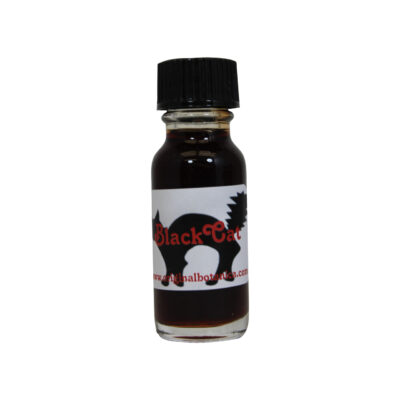
Traditional descriptions note that the candle was prepared with condition oil while the target was named aloud, then set into a mixture of Goofer Dust and Crossing Powder. In some accounts, dirt taken from the individual’s footprint was included to strengthen symbolic connection.
Practitioners described speaking firm petitions intended to weaken an enemy’s influence and interrupt their path. One recorded form of such a petition states:
Your steps weaken. Your path closes.
Accounts describe the candle being allowed to burn safely, after which the remaining materials were sealed or placed at liminal locations such as crossroads or the base of a tree. Cleansing of thresholds and personal space afterward was emphasized as a means of protecting one’s own path.
A Banishing Working Described in Hoodoo Tradition
Banishing work involving Goofer Dust appears in hoodoo accounts describing efforts to remove a dangerous or disruptive presence. These workings were framed as acts of boundary-setting and protection, rather than impulsive retaliation. Materials traditionally associated with this type of working include:
In traditional descriptions, the candle was dressed with condition oil and heated with powders associated with urgency and movement. A trail of Goofer Dust was symbolically directed away from the home or space in question, reflecting the intention of removal.
Practitioners recorded speaking declarative petitions asserting separation and release. One such petition is commonly cited as:
Your road leaves my road. Your presence leaves my gate.
Accounts note that the candle was allowed to burn fully, after which remaining materials were taken to a crossroads and left without further engagement. Cleansing of the home afterward was consistently emphasized as a way of restoring calm and reaffirming spiritual boundaries.
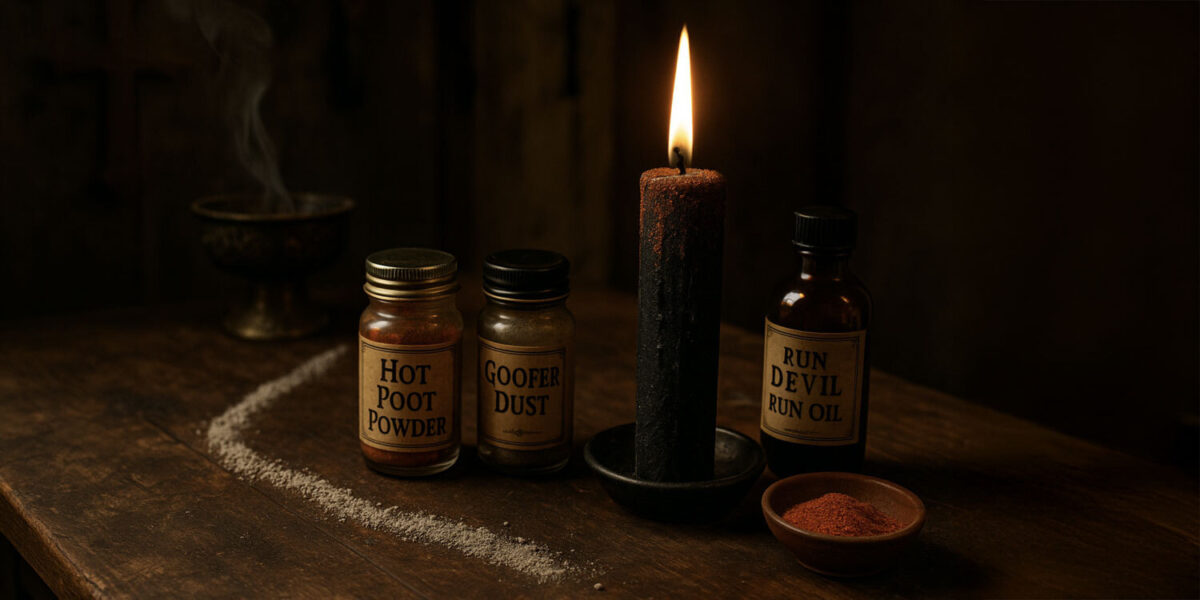
A Southern hoodoo rite calling for removal, protection, and a clear road ahead.
Traditional Interpretations of Movement in Goofer Work
In hoodoo tradition, changes following serious work were often interpreted symbolically rather than taken as immediate proof of outcome. Practitioners understood that movement could begin on a spiritual or psychological level before becoming visible in daily circumstances.
Folkloric accounts commonly describe interpretations such as:
Withdrawal or altered behavior by an adversary, understood as a shift in influence
Disruptions or delays in plans, interpreted as obstacles forming along a path
Dreams involving separation, endings, guardians, or boundaries
A personal sense of spiritual relief, release, or emotional settling
Changes in communication patterns or overall atmosphere
Traditional teachings emphasize that perceived movement was not always immediate or dramatic. In many accounts, changes were understood as unfolding gradually, with spiritual shifts preceding visible outcomes.
Traditional Alternatives Within Hoodoo Practice
Within hoodoo tradition, Goofer Dust was never regarded as the only response to harm or conflict. Folkloric teachings and practitioner accounts consistently reference gentler forms of work that were preferred when circumstances did not call for severe disruption. Commonly cited alternatives include:
- Reversing work to return harm
- Protection spells to prevent further damage
- Separation spells that create distance without destruction
- Justice petitions that ask higher powers to decide the outcome
These approaches reflect a broader principle within hoodoo: the well-being and steadiness of the worker were considered as important as the desired outcome. Tradition emphasizes discernment, balance, and respect for spiritual limits alongside effectiveness.
Spiritual Insights and Everyday Magic
Within hoodoo tradition, Goofer Dust is often described as belonging to the shadowed side of spiritual work. Even so, shadow is not viewed as evil, but as a source of instruction. Teachings surrounding Goofer Dust consistently emphasize the importance of boundaries, justice, and spiritual strength when engaging with old and powerful forces.
In everyday life, these teachings were understood symbolically. Hoodoo emphasizes knowing one’s limits, honoring personal values, and moving with intention and respect in all forms of spiritual engagement. In this way, Goofer Dust serves less as a daily tool and more as a reminder of discernment, responsibility, and spiritual maturity.
FAQs About Goofer Dust
Is Goofer Dust the same as graveyard dirt?
No. Traditional sources describe graveyard dirt as a standalone curio with its own body of practice. Goofer Dust is a blended powder that may or may not include graveyard dirt, depending on regional or lineage-based tradition.
Was Goofer Dust considered appropriate for beginners?
Folkloric teachings generally associate Goofer Dust with experienced work, particularly because of the cleansing, closure, and ethical responsibility involved. Gentler powders were more commonly referenced for those early in their practice.
Was Goofer Dust believed to backfire?
Traditional accounts warn that unstable emotional states, unresolved anger, or lack of spiritual preparation were believed to increase risk. Cleansing, clarity, and restraint were emphasized as safeguards.
Was Goofer Dust always used for harm?
Most recorded uses involve baneful or disruptive aims. However, some older traditions reference rare applications in intense love or luck work, though these uses were uncommon and not widely shared.
What was traditionally done if someone believed they had encountered Goofer Dust?
Folkloric responses commonly involved cleansing baths, floor cleansing, and protective measures for footwear or thresholds, reflecting a belief in restoring balance and personal protection.
Reflecting on the Deeper Lessons of Goofer Dust
In hoodoo tradition, Goofer Dust is often described as more than a tool for justice or defense. It is a mirror reflecting the steadiness of the worker, the clarity of intention, and the willingness to accept spiritual responsibility. When approached with respect, it was understood to teach courage, discipline, and restraint rather than impulse.
Ultimately, Goofer Dust reminds practitioners that power does not reside only in light. It also resides in the shadowed places where boundaries are drawn and harm is confronted. Through awareness and respect for tradition, hoodoo teaches that the spirit remains whole, the path remains steady, and the work reveals only what one is prepared to understand.